
Home » Blog » Parenting Tips » Homework Station for Kids
Creating a Homework Station for Kids
(That Actually Works!)
- By: Lucy
- Updated: February 27, 2026
- No Comments

Setting up a homework station for kids isn’t just about organizing school supplies, it’s about creating a predictable, inviting space where kids feel supported and capable of doing their best work. If you’re searching for the best homework station ideas or a simple setup that supports focus and independence, this post is for you.
Why a Homework Station for Kids Matters?
A dedicated homework space for kids provides structure and routine. When kids know exactly where to go and what to expect, it reduces resistance and helps shift their mindset into learning mode. Even if your child doesn’t bring home daily assignments, having a consistent space helps reinforce responsibility and independence.
Inside This Post
A Friendly Reminder: What Homework Should Be
As both a mom and a teacher, I believe homework should be a brief review of what was learned at school. It should not be a burden to parents or a punishment for kids. Kids already spend long hours at school. The last thing they want to do is go home and spend hours completing homework assignments. To put it simply, homework should reinforce classroom concepts and promote independence without causing stress.
Homework should:
- Reinforce skills already taught in the classroom
- Be completed with minimal adult help
- Be short, purposeful, and age-appropriate
- Never introduce brand-new content
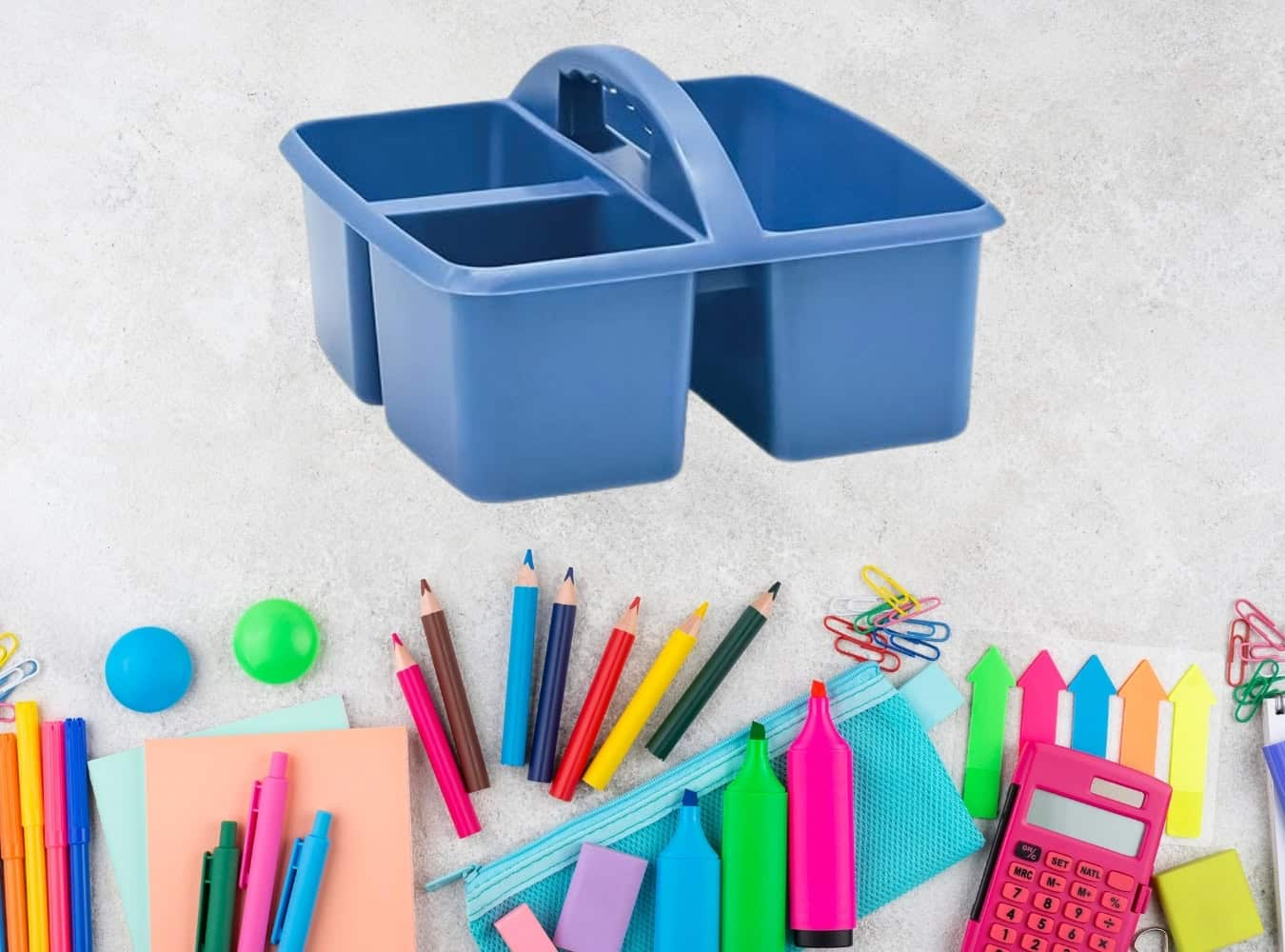
Supplies You’ll Need
- Pencils (pre-sharpened or mechanical)
- Erasers
- Crayons, markers, colored pencils (preferred coloring supplies)
- Scissors
- Glue sticks
- Notebooks or drawing pads/loose paper
- Post-it notes
- Timer or sand timer
- Pencil sharpener
- Fidget tools (if helpful)
One of the best tips for setting up a homework station is to use a small bin, pencil case, or plastic caddy to organize school supplies at home. Even better: let your child personalize their caddy or bin. When children decorate their own bins or choose their own supplies, it builds ownership and encourages care. This process can be as simple as giving them stickers of their favorite characters to put on their caddy or letter stickers to spell their name. These small touches help kids feel more connected to their workspace.
Keep It Simple and Distraction-Free
You don’t need a Pinterest-perfect desk. Just a consistent study space with good lighting works. Even a portable station or caddy they can use at the kitchen table is fine. Less is more when it comes to distractions. My sons use a small table in the kitchen that I initially purchased for them to eat their meals. The table features a dry-erase surface, which I love using for modeling writing and illustrating number sense.
Set a Routine That Works for Your Family
Establish a flexible but consistent after-school routine for your child. Here’s a sample elementary school homework routine that balances work, rest, and play.

If your child doesn’t have any homework on a given day, don’t worry. There are still meaningful ways to reinforce learning and spend quality time together. One of my favorite options is getting my boys involved in making dinner! Check out my post, The Benefits of Cooking with Kids: Why You Should Involve Them in the Kitchen. It’s full of fun, practical ideas for turning dinner time prep into an educational experience that reinforces math, literacy, and essential life skills.
How Long Should a Homework Block Last?
Children thrive with short, structured learning bursts. Here’s a general guide I follow:

The National Education Association recommends 10 minutes per grade level. Research also shows that purposeful, shorter homework sessions are more effective and less stressful. (https://www.nea.org/)
A Final Thought
Whether you’re researching the best homework station ideas or trying to build independence in your child, this guide is a great starting point. A homework station for kids should feel calming, supportive, and not stressful. With consistency, structure, and personalization, you can transform after-school chaos into a focused and engaging learning experience. It’s not about perfection or creating a picture-perfect homework station; it’s simply about finding what truly works for your child’s unique needs. Remember, you can always make adjustments and modify your routine as needed.
Keep me posted on how it goes with your kids. I would love to hear from you!!!
Similar Posts You May Enjoy

Lucy
Mom, wife, educator, and the heart behind Mom, What Did You Make? Inspired by my son’s daily question, this blog began as a way to share our favorite Dominican recipes and has grown into a space for food, family, and advocacy. Here, you’ll find recipes that honor our culture, parenting insights shaped by 15 years of teaching experience, and resources to help families feel supported and empowered.
