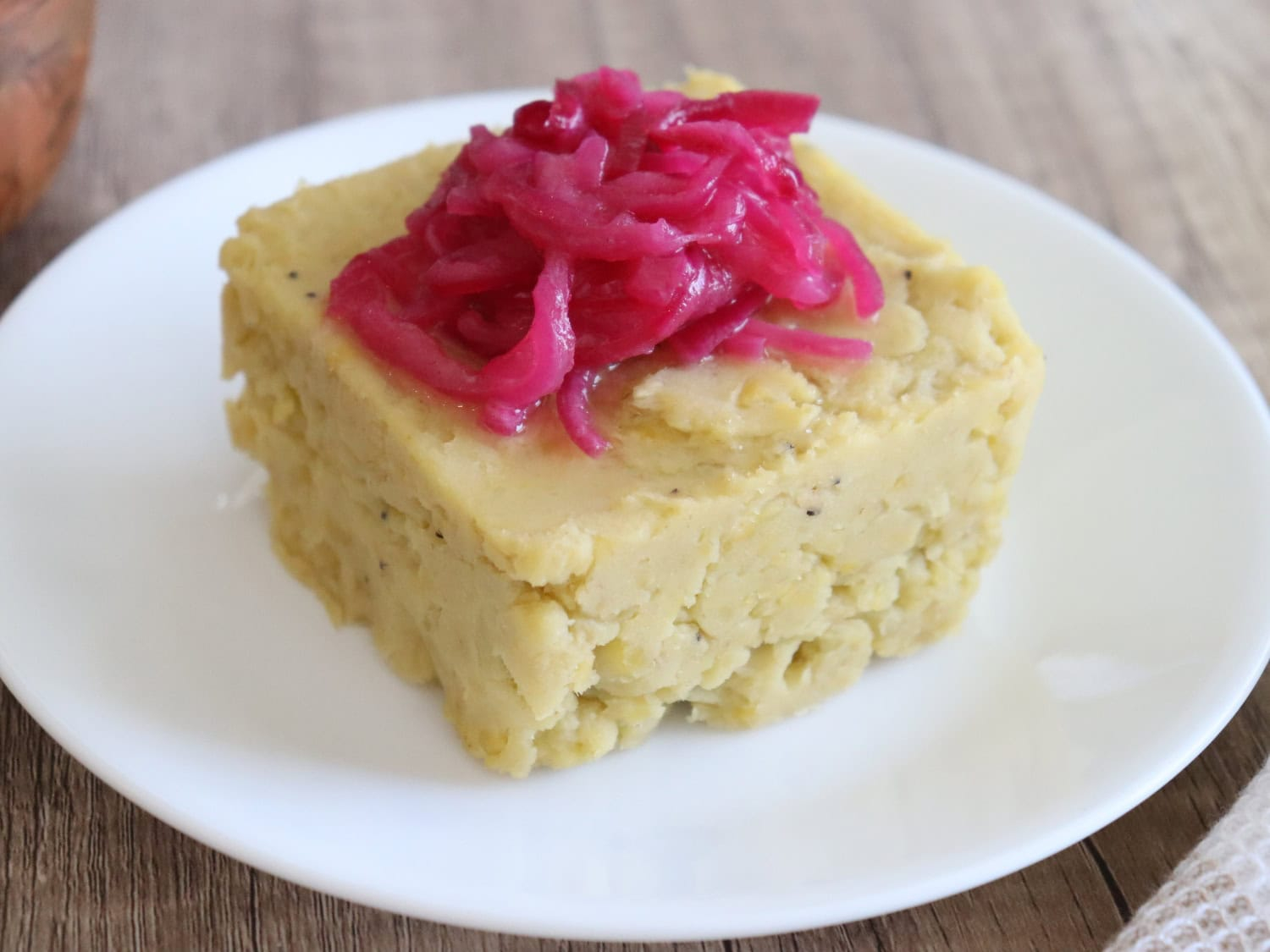
Dominican Sautéed Onions
(Cebolla Salteada)
- By: Lucy
- Updated: February 27, 2026
- No Comments
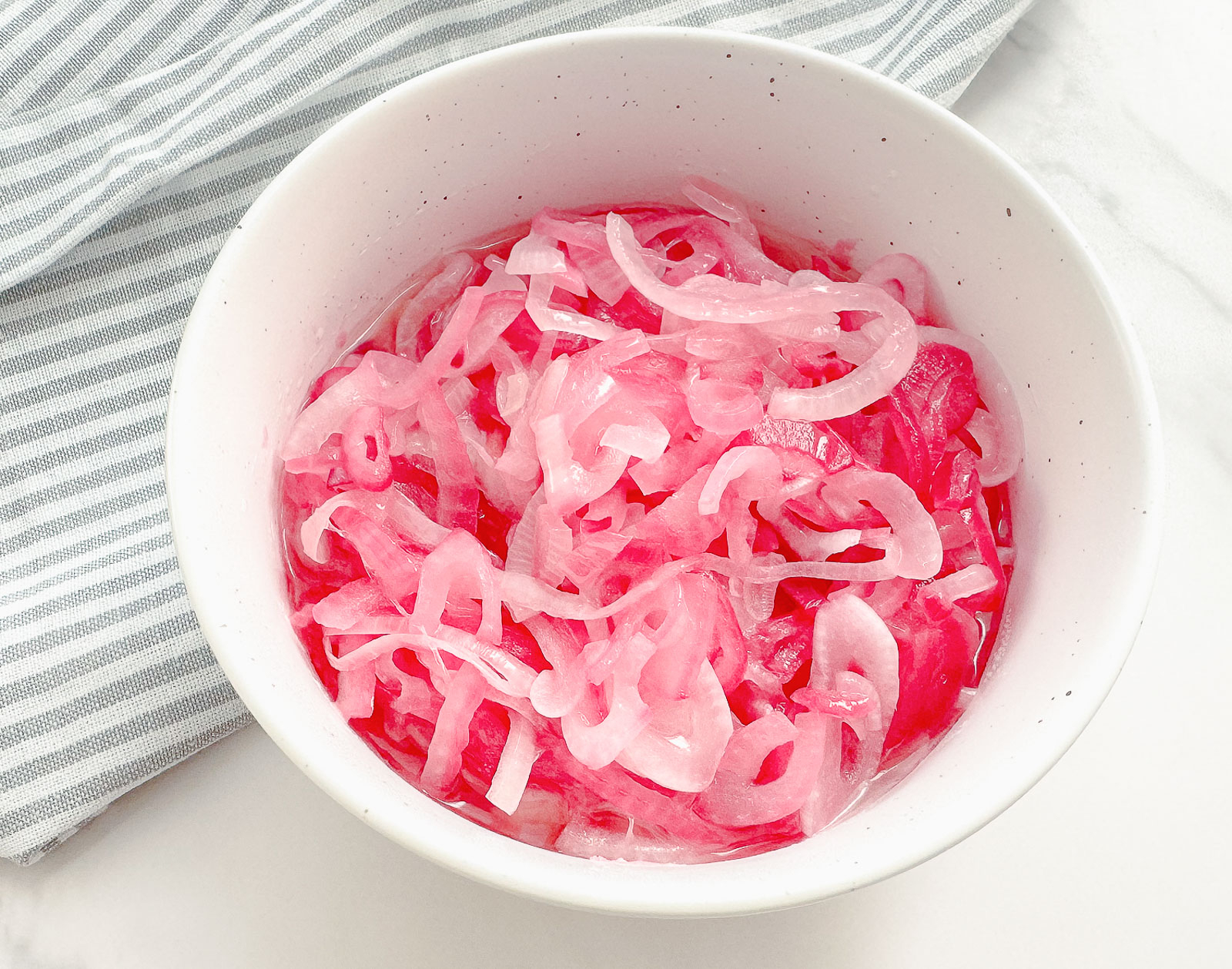
These Dominican-style sautéed onions are tangy and flavorful, with just the right amount of crunch. They are marinated in sour orange juice, vinegar, salt, and sugar, then quickly sautéed until crisp and tender. These sautéed onions add a citrusy bite that balances the buttery mangu.
As a child, I was never a fan of the onions on top of the mangu. They always tasted too sharp for my palate and left an aftertaste I just couldn’t get used to. But once I started cooking for myself, I began experimenting with ways to mellow them out. That’s when I learned about pickled onions and saw that sugar was often used to balance the flavor.
One day, I tried it: a little sugar, some salt, vinegar, and some sour orange juice (one of my favorite ingredients). The result was a beautifully balanced flavor: tangy, slightly sweet, and so much smoother than what I remembered as a kid.
Now, whenever I have a little extra time, I let the onions marinate for 10 to 15 minutes before sautéing. Not only does it help them absorb all that flavor, but it also reduces the time they need in the pan.
My husband, can’t get enough. He loves them over mangu, yuca, guineítos, and even roasted chicken. Honestly, these Dominican sautéed onions are one of those simple touches that elevate almost any meal.
Inside This Post
Recipe Highlights
Simple ingredients, big flavor – Pantry staples turn onions into something special.
Balanced and Tangy– Vinegar, sugar, salt, and sour orange create a smooth tangy bite.
Quick to make – a short marinade means the onions sauté in minutes.
Versatile – Great over mangu, yuca, guineítos, roasted chicken, malanga, or even a sandwich.
The Ingredients You'll Need
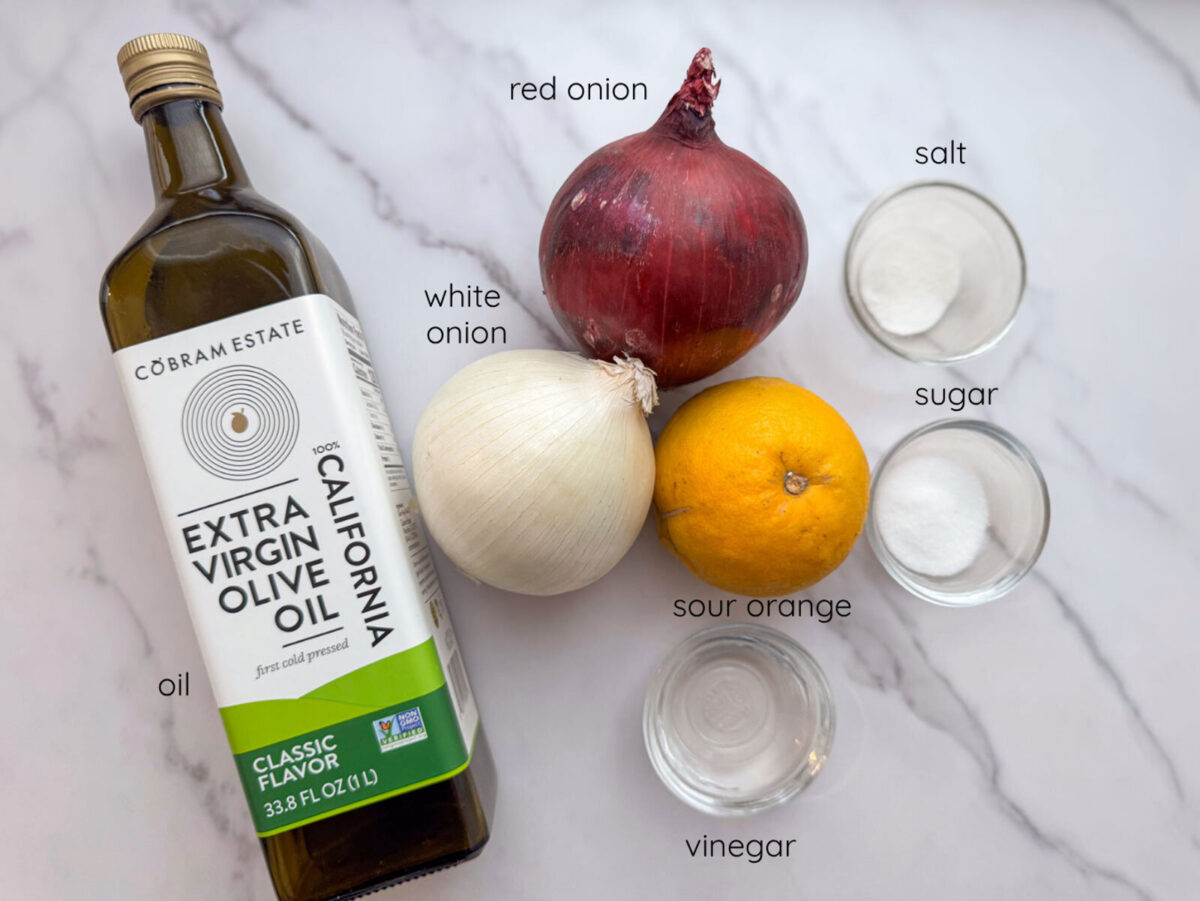
Let’s go over what you’ll need to make these tangy, flavorful sautéed onions:
- Red onion– slightly sweet, adds depth
- White onion- milder in flavor, provides a well-rounded flavor
- Salt- fine sea salt
- Oil- a neutral oil with a high smoke point, like canola, avocado oil, or extra light-tasting olive oil
- Vinegar – adds acidity and balance
- Sour Orange-Bright citrus flavor
- Sugar- mellows the sharpness of the onions
Step-By-Step Instructions
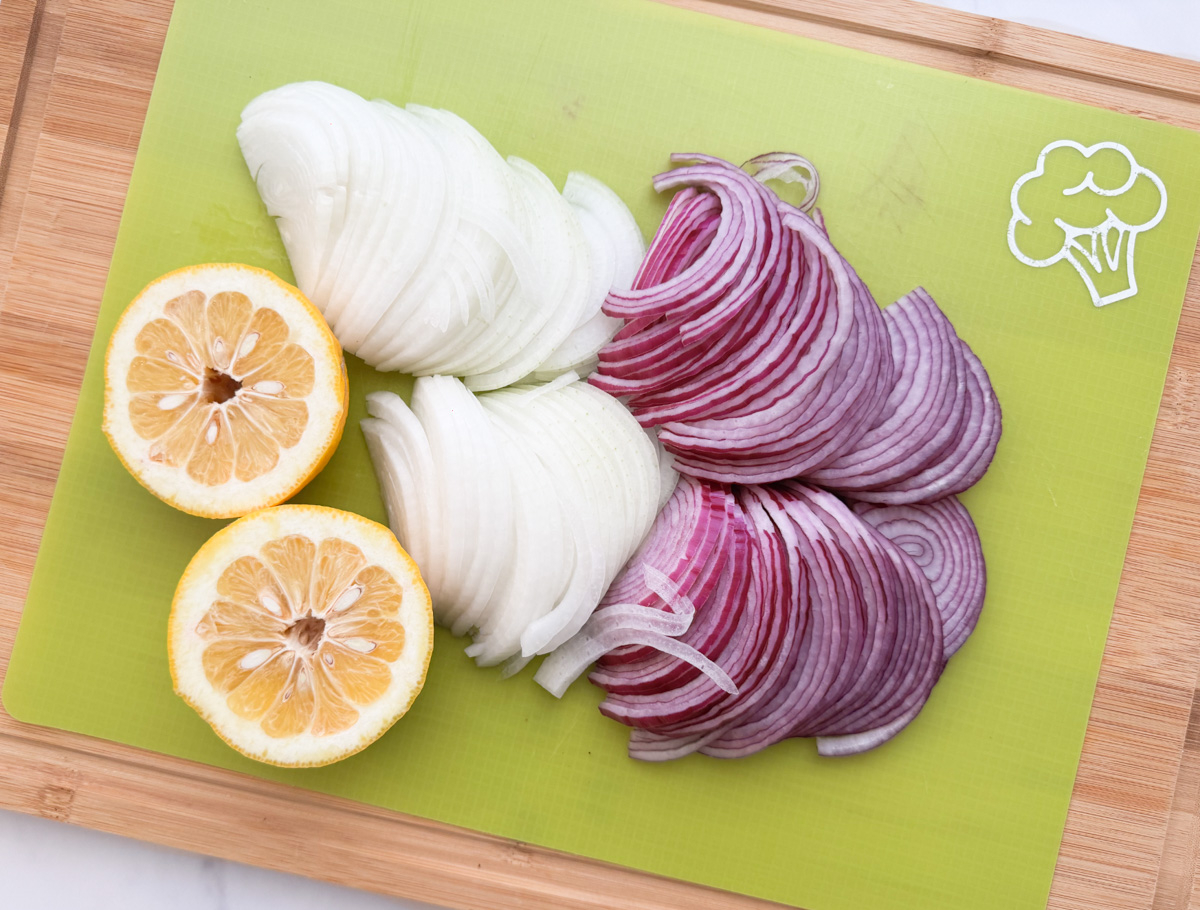
1. Slice Onions
Start by thinly slicing the red and white onions.
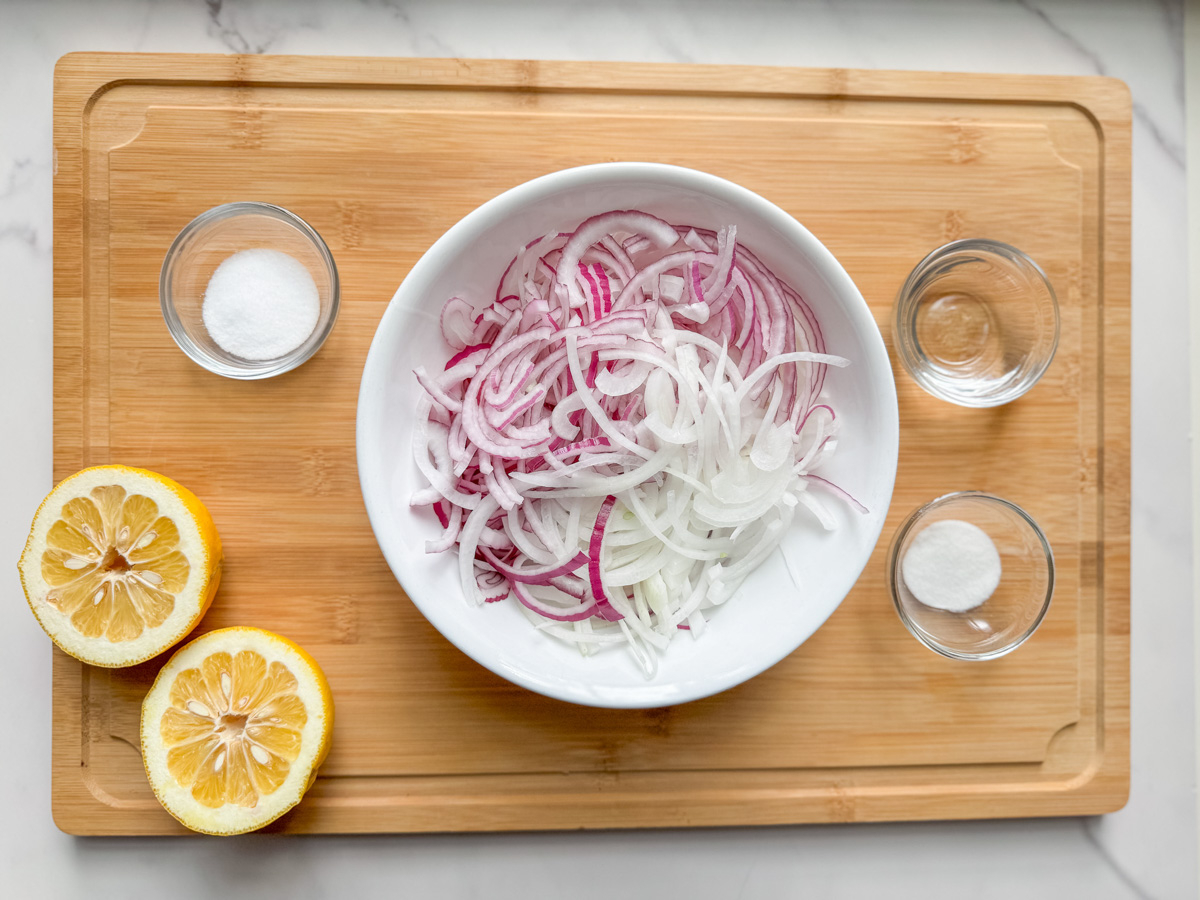
2. Marinate
Place the onions in a bowl and add vinegar, sour orange, salt, and sugar. Let them sit for about 10–15 minutes. This helps them soak up all that flavor and makes them cook faster.
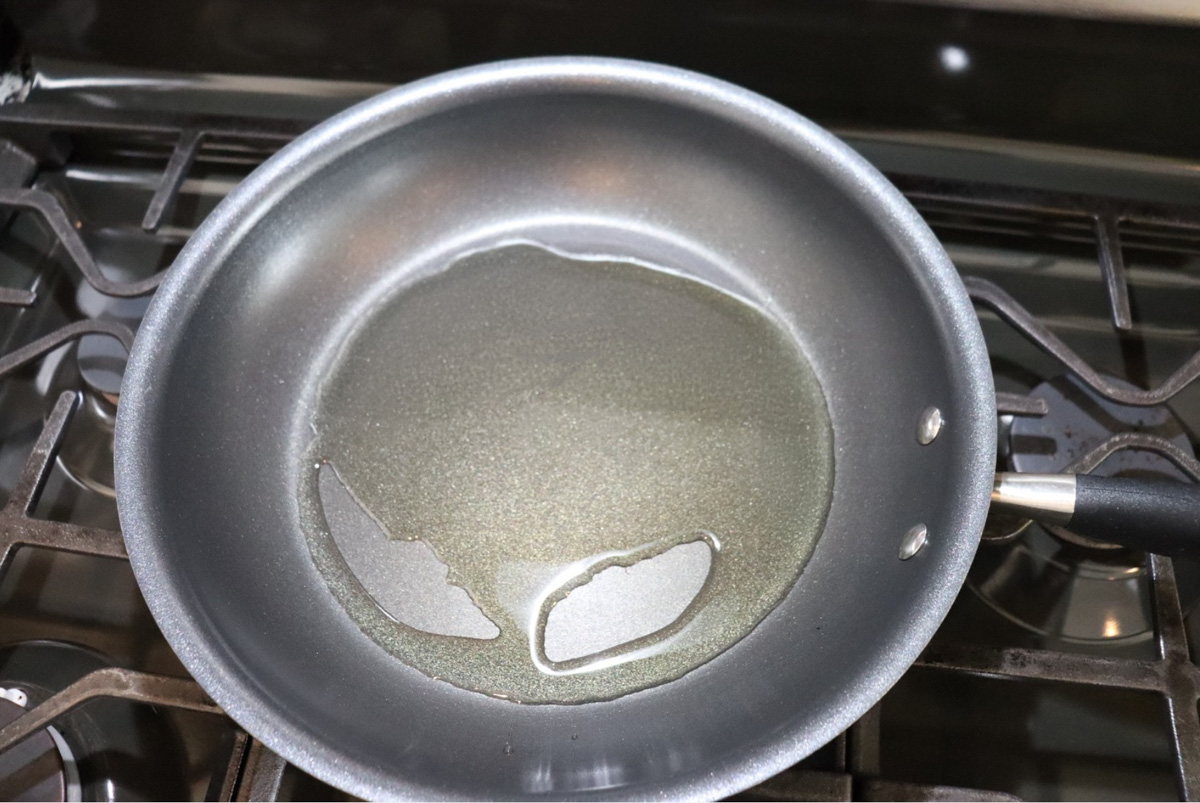
3. Heat Oil
Heat the oil in a skillet over medium-high heat.
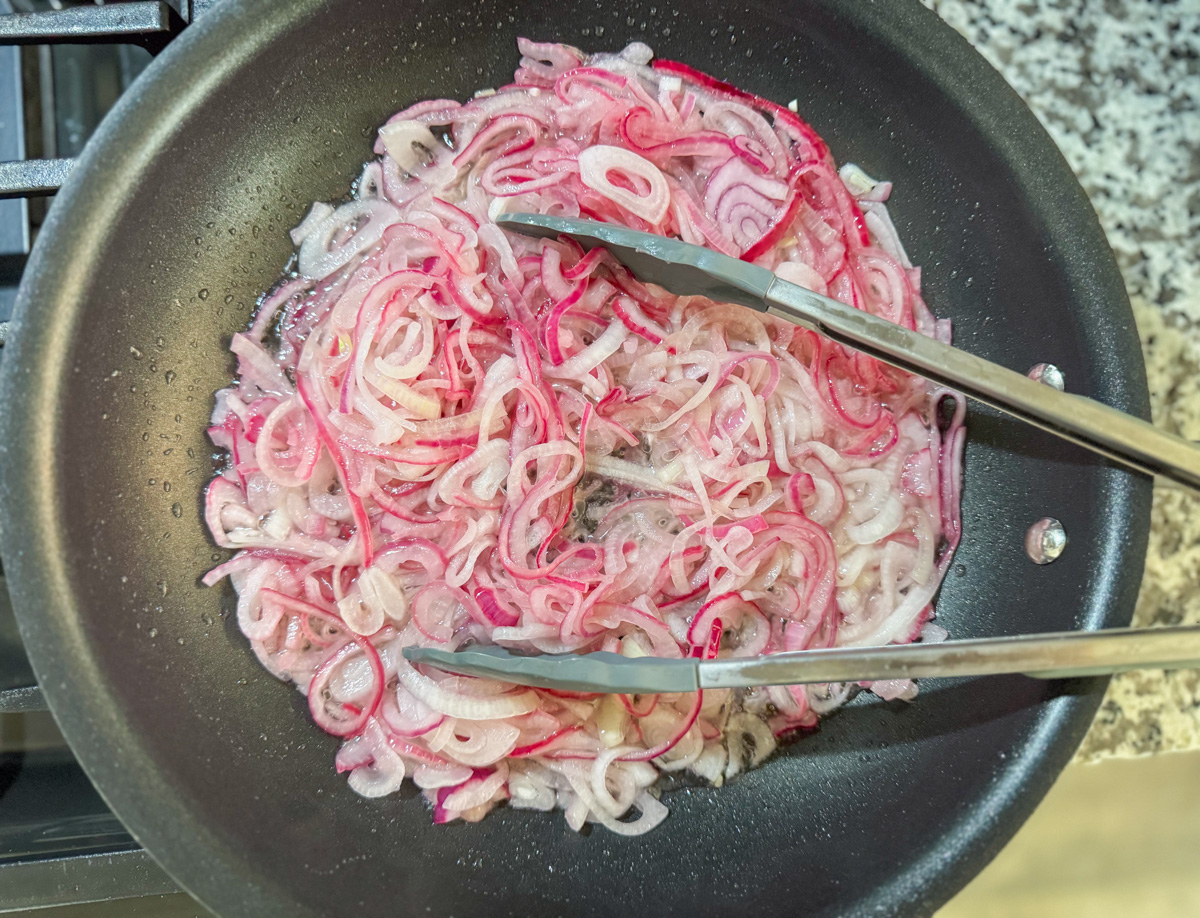
4. Sauté
Add the onions and cook until tender but still keeping a little crunch (just my preference).
5. Serve
Remove from heat once the onions are tender with a slight bite.
How Your Kids Can Help
My boys don’t usually help me with this one—they say the onions hurt their eyes! But if you have brave little ones who don’t mind shedding a tear or two, there are still a few simple ways they can join in.
Mix the marinade: Have them help stir together the vinegar, sour orange juice, salt, and sugar in a bowl. This gives them a fun, hands-on role.
Set up the ingredients: Kids can help by laying out the ingredients on the counter. This is great for practicing counting and following steps.
Frequently Asked Questions
Why do you use both red and white onions?
Because they each bring something different to the table! Red onions add a little sweetness and bold flavor, while white onions are milder. I like the balance of both—it gives the dish depth and color.
What does the sugar do?
A small pinch of sugar helps mellow out the sharpness of the onion while bringing out its natural sweetness, especially helpful if you’re not a fan of that strong aftertaste (I wasn’t either!).
Why marinate the onions before sautéing?
Marinating for 10–15 minutes softens the onions and lets them soak up all that flavor. Plus, it cuts down on the cooking time.
Do I have to use both vinegar or sour orange?
Nope, but I love the extra flavor it brings. The vinegar adds kick, and the sour orange gives it a bright, citrusy boost.
Why marinate the onions before sautéing?
Letting the onions sit in vinegar, sour orange, salt, and sugar for 10–15 minutes softens them slightly and reduces the cooking time. It also deepens the flavor.
Can I make these sautéed onions in advance?
Yes! They store well in the fridge for 3–4 days. You can reheat them in a skillet or microwave.
What dishes go well with these sautéed onions?
So many! I usually make them for mangu, but they’re also amazing over boiled yuca, green bananas (guineitos), or even grilled or roasted meats.

Dominican Sautéed Onions (Cebolla Salteada)
Equipment
- Sharp knife
- Cutting board
- Mixing bowl
- Large skillet
- Wooden spoon
- Citrus juicer (optional)
Ingredients
- 1 large red onion sliced thin
- 1 large white onion sliced thin
- 3 tablespoons distilled white vinegar
- 2 1/2 tablespoons sour orange juice or mix of orange and lime juice
- 2 1/4 teaspoons salt
- 1 teaspoon white sugar
- 3 tablespoons oil canola, avocado oil, or olive oil
Instructions
- Slice the Onions: Thinly slice the red and white onions. Add them to a bowl.

- Marinate: Pour in the vinegar and sour orange juice. Add salt and sugar. Give it a good mix and let it sit for 10–15 minutes.

- Heat the Oil: Warm the oil in a skillet over medium heat.

- Sauté the Onions: Add the onions to the skillet, along with just a bit of the liquid they released while marinating (enough to boost the flavor, but not too much). Cook for about 5 minutes, just until they soften slightly but still have a bit of bite.
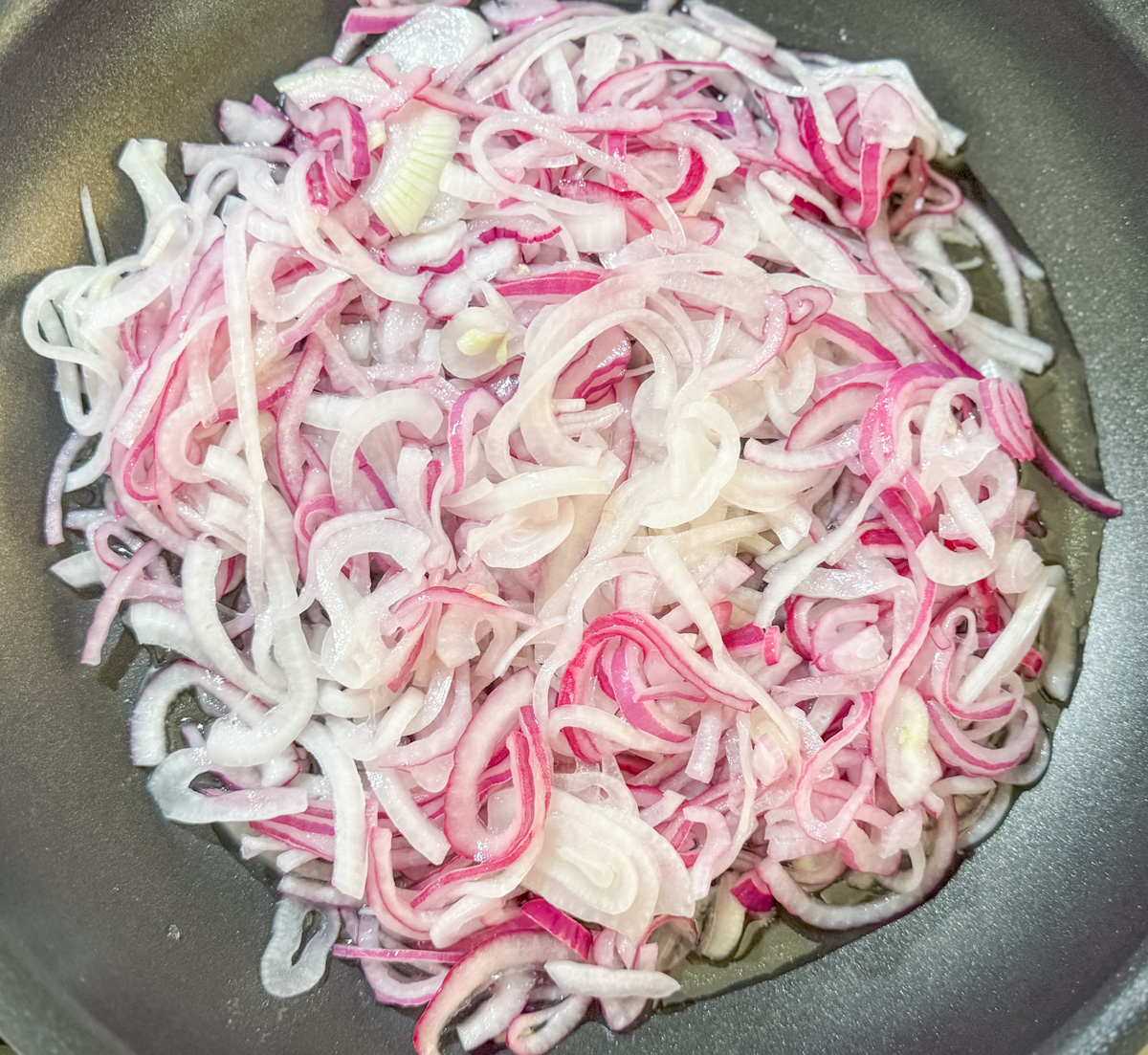
- Remove from heat once the onions are tender with a slight bite.

Notes
Nutrition
Is sazón the same as sofrito?
In Dominican cooking, the terms are often used interchangeably. While “sofrito” is more common in Puerto Rican and Cuban cooking, Dominicans usually say “sazón” when referring to this homemade seasoning mix.
How do you store Dominican sazón?
You can store Homemade Dominican Sazón in an airtight container in the fridge for up to two weeks. For longer storage, freeze it in ice cube trays or small jars. It’ll last up to 3 months in the freezer.
Can I make this sazón without culantro?
Yes. If you can’t find culantro, you can use more cilantro. The flavor won’t be as deep or earthy, but it will still make an amazing sazón
Do I need to cook the sazón before using it?
Nope! Dominican sazón is added at the beginning of cooking. It infuses your dish with rich, aromatic flavor as it simmers alongside your ingredients.
Can I use a food processor or blender to make sazón?
Yes! A blender or food processor makes it easy to blend everything into a smooth or chunky paste, depending on your preference. Add a little olive oil or water to help it blend evenly.
What recipes can I use Dominican sazón in?
This sazón is very versatile. Use it to make pollo guisado, habichuelas guisadas, moro, locrio and chicharrones de pollo just to name a few. It’s also perfect for soups, stews, and a great addition to other marinades.