Dominican Fried Cheese
- By: Lucy
- Updated: July 30, 2026
- No Comments
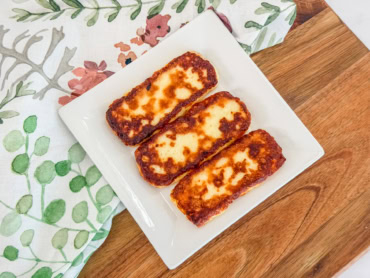
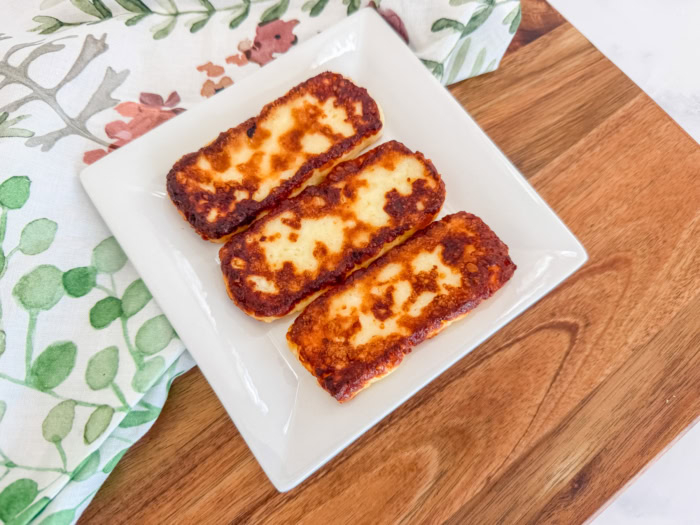
Dominican fried cheese, also known as queso frito Dominicano, is salty, soft in the center, and golden on the outside. It is commonly served for breakfast with mangú, eggs, Dominican salami, and pickled onions, but there are so many other ways to enjoy it.
Frying cheese is easy, but it can get messy. As the cheese cooks, it releases water, which makes the hot oil splatter. This extra moisture can also stop the outside from turning golden.My trick is to dry the cheese thoroughly and lightly dust both sides with flour before frying it. I use a stainless-steel fine-mesh dredge shaker because it distributes a thin, even layer without adding too much flour.
This way, the cheese gets a beautiful golden crust, and my stove stays much cleaner. My family loves to eat it right off the plate, so I have to keep an eye on it while I finish cooking the rest.Inside This Post
Why This Dominican Fried Cheese Recipe Works
This recipe and how-to guide for frying cheese focus on getting the cheese as dry as possible before frying.
- Placing the cheese between paper towels helps absorb the moisture sitting on the surface.
- Lightly dusting flour absorbs a little more moisture and helps the cheese brown evenly.
- The flour should be barely visible. You are not breading or creating a thick coating on the cheese.
- Make sure the skillet is large enough to fry the cheese slices without crowding them. When the slices are crowded together, the moisture becomes trapped in the pan. The cheese can start steaming instead of developing that golden crust.
What You'll Need to Make Dominican Fried Cheese
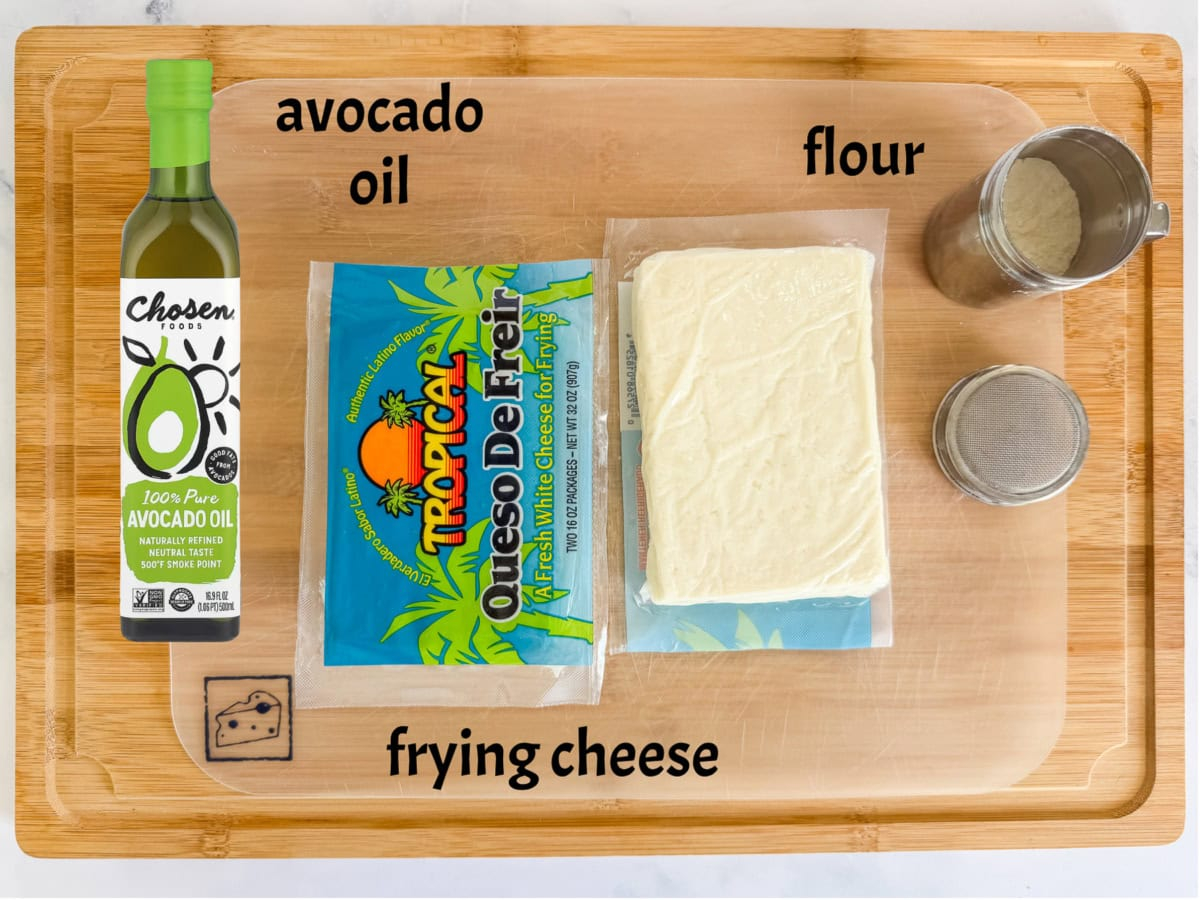
Tropicana Frying Cheese
Make sure the package specifically says Frying Cheese. Tropicana also sells cheese labeled “white cheese,” but that is not the one I purchase for this recipe. The frying cheese holds its shape better in the skillet and develops a nice golden exterior.
All-Purpose Flour
You only need a small amount of flour.The flour helps absorb moisture from the surface of the cheese and encourages better browning. Too much flour can create a heavy coating or burn in the oil, so keep the layer thin.
Avocado Oilor Neutral Oil
I like to use avocado oil because it has a neutral flavor and works well for frying.You only need enough oil to create a thin layer across the bottom of the skillet.
How to Fry Dominican Cheese
1. Dry the Cheese
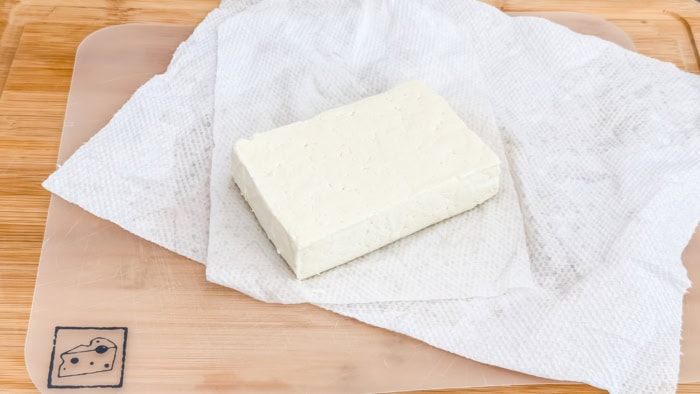
- Remove the cheese from the package and place it on a plate lined with paper towels.
- Pat the entire block thoroughly with additional paper towels. Place a clean paper towel over the top and let it sit for a few minutes. This gives the paper towels time to absorb some of the water that would otherwise cause the hot oil to splatter.
2. Slice the Cheese
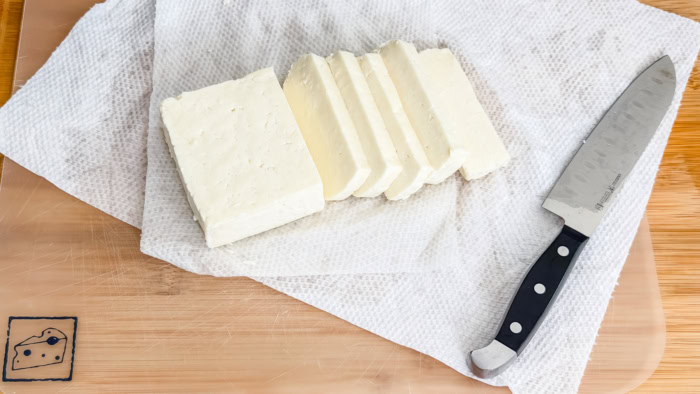
- Cut the cheese into slices to suit your preferred texture.
- Thinner slices become crispier and cook more quickly. Thicker slices stay softer in the center.
- Try to keep the slices around the same thickness so they cook evenly.
3. Pat the Slices Dry
- After cutting the cheese, pat the individual slices again with paper towels if they still feel damp.
- Cutting the cheese can expose more water, so this extra step is helpful.
4. Lightly Dust With Flour
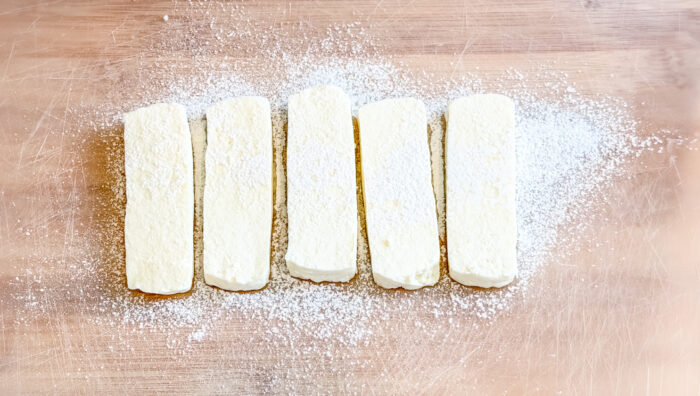
- Add a small amount of all-purpose flour to a stainless-steel, fine-mesh dredge shaker.
- Lightly dust both sides of each cheese slice. You should only see a very thin layer of flour on the surface. Gently shake off any excess before frying.
5. Heat the Oil
- Choose a skillet large enough to hold the cheese without crowding the slices.
- Add enough avocado oil to lightly coat the bottom of the skillet. Heat the oil over medium heat.
- The oil should be hot before you add the cheese, but it should not be smoking.
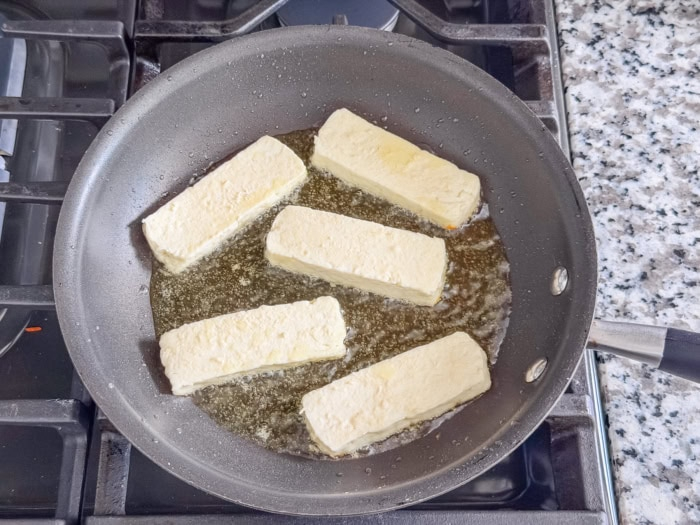
6. Fry the First Side
- Carefully place the cheese slices into the skillet in a single layer.
- Leave some room between each piece. When the slices are too close together, the cheese can steam instead of brown.
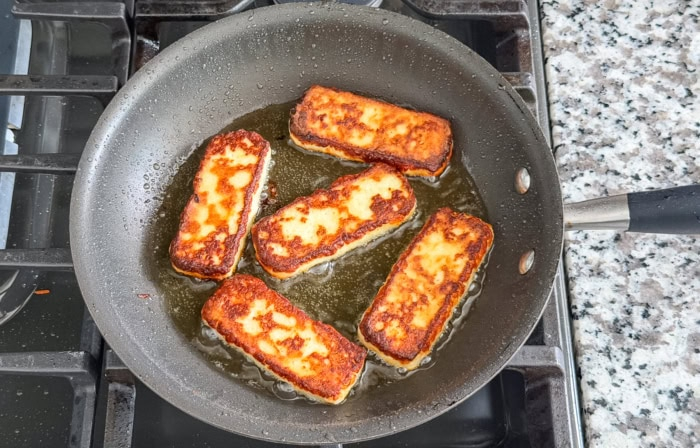
- Let the first side cook without moving it around too much. Once a golden crust develops, the cheese should release more easily from the skillet.
7. Flip the Cheese
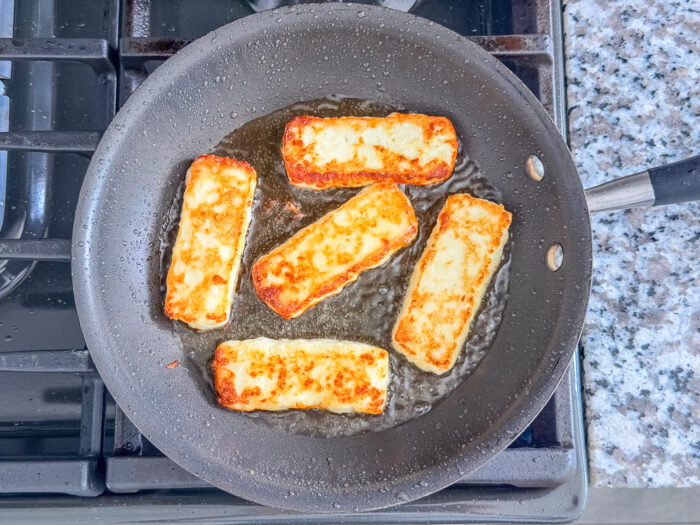
- Flip each slice using a fork or kitchen tongs.
- Continue cooking until the second side reaches the desired color.
- Some people prefer their fried cheese lightly golden and soft. Others like it darker with crispier edges. That part depends on your preference.
8. Remove from Skillet and Serve
- Transfer the fried cheese to a plate lined with paper towels to absorb the excess oil.
- Serve it right away while the outside is still crisp and the center is warm.
Tips for the Best Dominican Fried Cheese
-
Check the package carefully:
You want cheese specifically labeled for frying, not only white cheese. -
Dry the cheese thoroughly:
Do not rush the drying step. Removing excess moisture helps reduce splattering and improve the cheese’s color. -
Use a Fine Mesh Dredge Shaker:
A stainless-steel fine-mesh dredge shaker makes it much easier to apply a light, even layer of flour. Adding flour with a spoon can leave heavy patches that may burn in the skillet. -
Give the Cheese Enough Room:
Use a large skillet or cook the cheese in batches. Each slice needs enough room to make direct contact with the skillet and develop a golden crust. -
Do Not Flip It Too Soon:
Let the first side cook long enough to form a crust before trying to lift it.Moving the cheese too much can keep it from browning evenly and may cause it to stick. -
Adjust the Heat as Needed:
Lower the heat slightly if the flour is browning too quickly.If the cheese is sitting in the oil without developing any color, increase the heat a little.
Variations
Crispier Fried Cheese
- Cut the cheese into thinner slices and let both sides develop a deeper golden color. You can also use cornstarch instead of flour. It gives the cheese a crisper texture.
Softer Fried Cheese
- Cut the cheese into thicker slices and remove them once both sides are lightly golden. The center will stay softer.
What to Serve With Dominican Fried Cheese
- Dominican fried cheese is best served hot, right after it comes out of the skillet
- .You can serve it as part of a full Dominican breakfast, with boiled root vegetables, inside a sandwich, or by itself.
- For a full Dominican breakfast, serve it with mangú, eggs, Dominican salami, and pickled onions.
- Fried Cheese Dominican fried cheese can be served with:
- Mangú
- Boiled yuca
- Boiled guineítos
- Boiled rulos
- Boiled plátanos
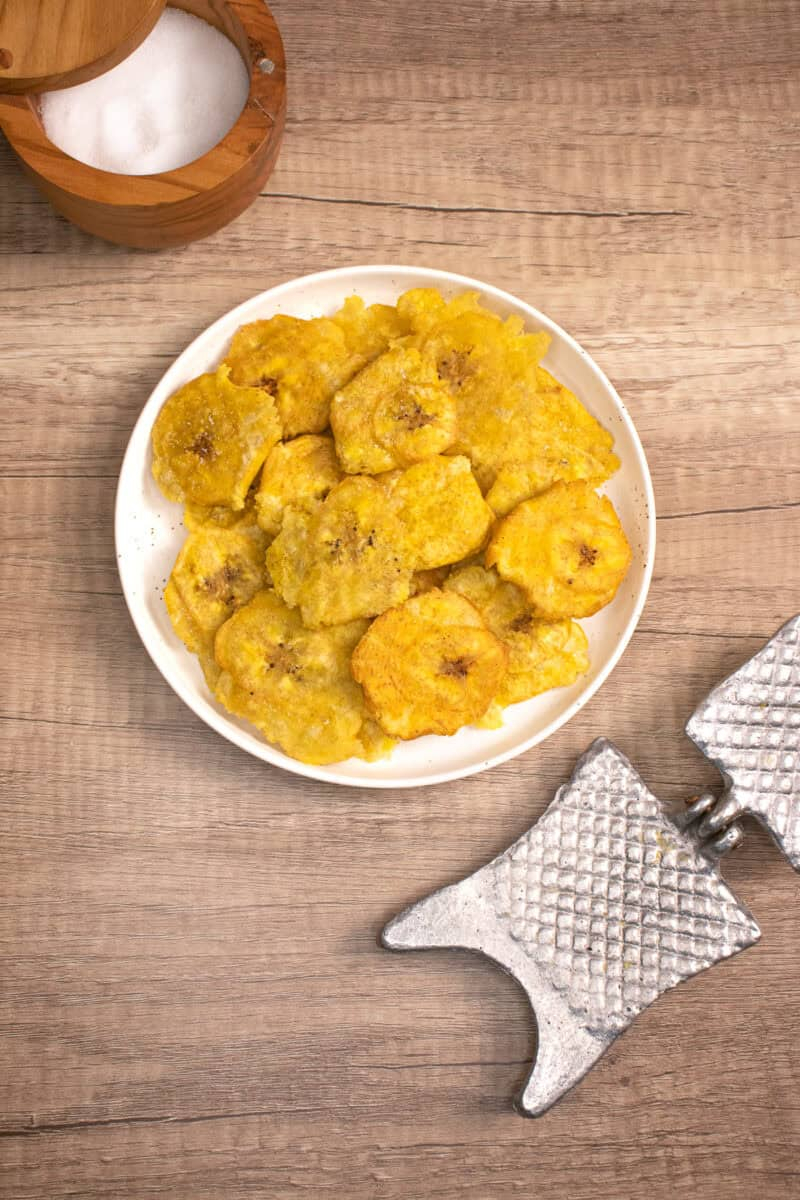
- Fried plantains
- Malanga
- Eggs
- Dominican salami
- Pickled Dominican onions
- Bread or sandwiches
Storage and Reheating
Dominican fried cheese tastes best immediately after frying.
-
Place leftovers in a covered container and refrigerate them. For the best texture, try to use them within two to three days.
Reheat the cheese in a skillet over medium heat until warmed through. You can also use an air fryer for a few minutes to help bring back some of the crispness.The microwave will warm the cheese, but the outside will become softer.
I do not recommend freezing the cheese after frying because the texture can change once it is thawed and reheated.
Frequently Asked Questions
What Cheese Is Used for Queso Frito Dominicano?
Do I Have to Use Flour?
How Thick Should I Slice the Cheese?
How Much Oil Should I Use?
Can I Prepare the Cheese Ahead of Time?
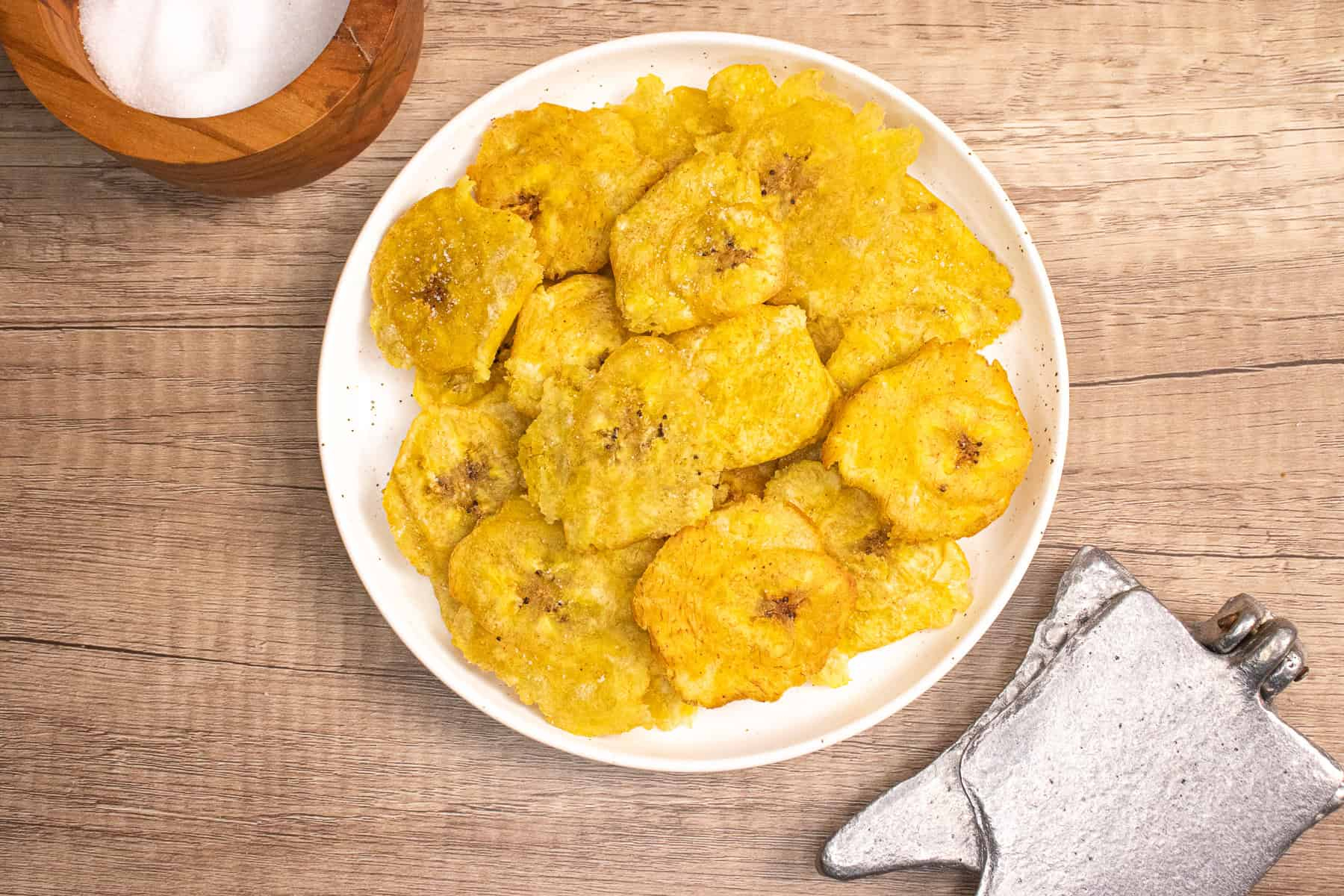
Tostones (Fried Green Plantains) Recipe
Equipment
- Knife
- Cutting board
- Tostonera (alt. use a Glass Cup or a Mug)
- Skillet or frying pan
- Slotted spoon
- Vegetable Peeler (optional)
Ingredients
- 3 Green plantains
- Canola oil or a neutral Oil
- Salt to taste
Instructions
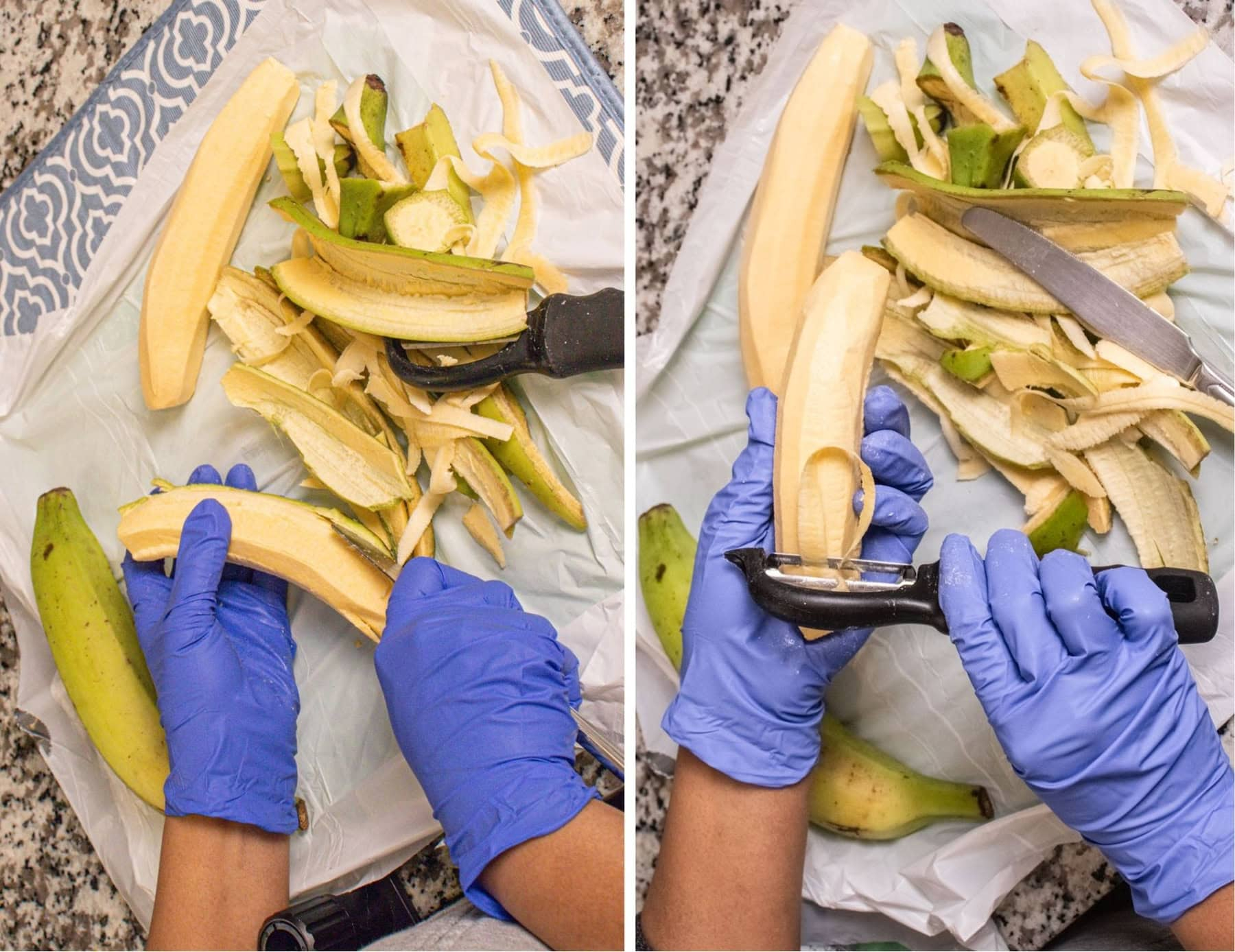
- Peel the plantains by cutting off the ends, making a slit down the skin, and using a butter knife to lift the peel. Use a vegetable peeler to remove any leftover peel so the plantains stay clean and do not turn dark.
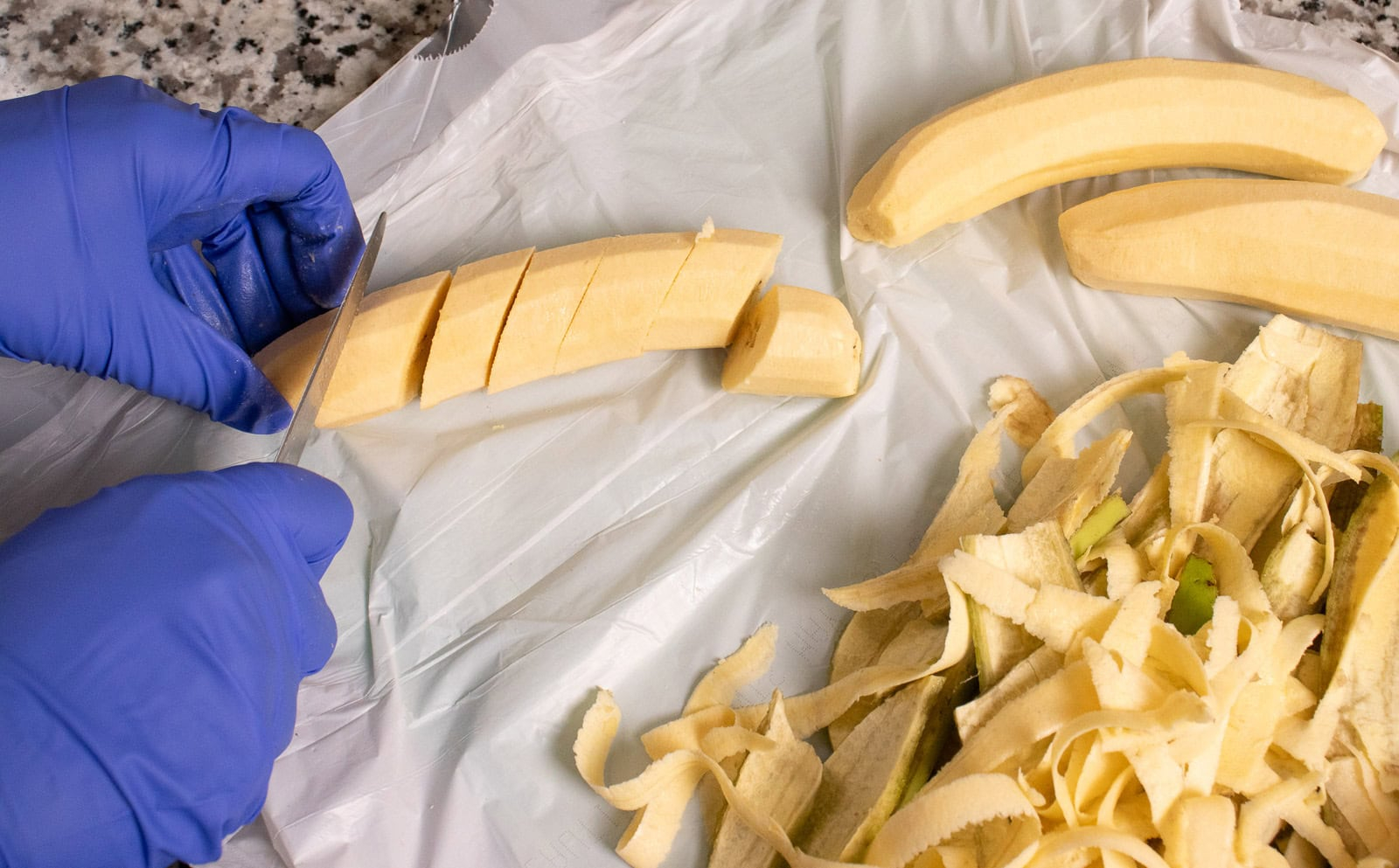
- Slice the plantains into even pieces that are not too thick or too thin ( 1 to 1 1/2 inch thick).
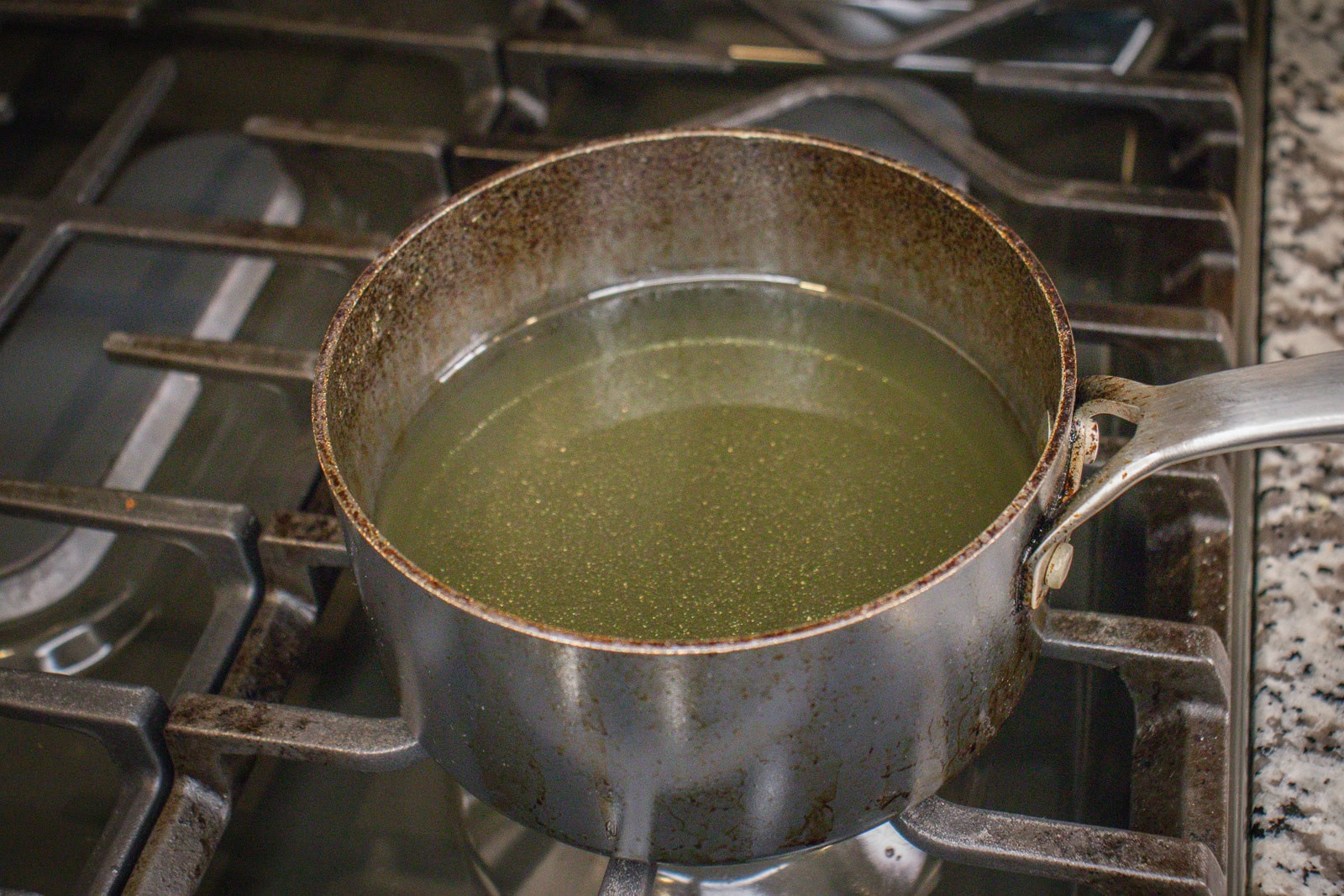
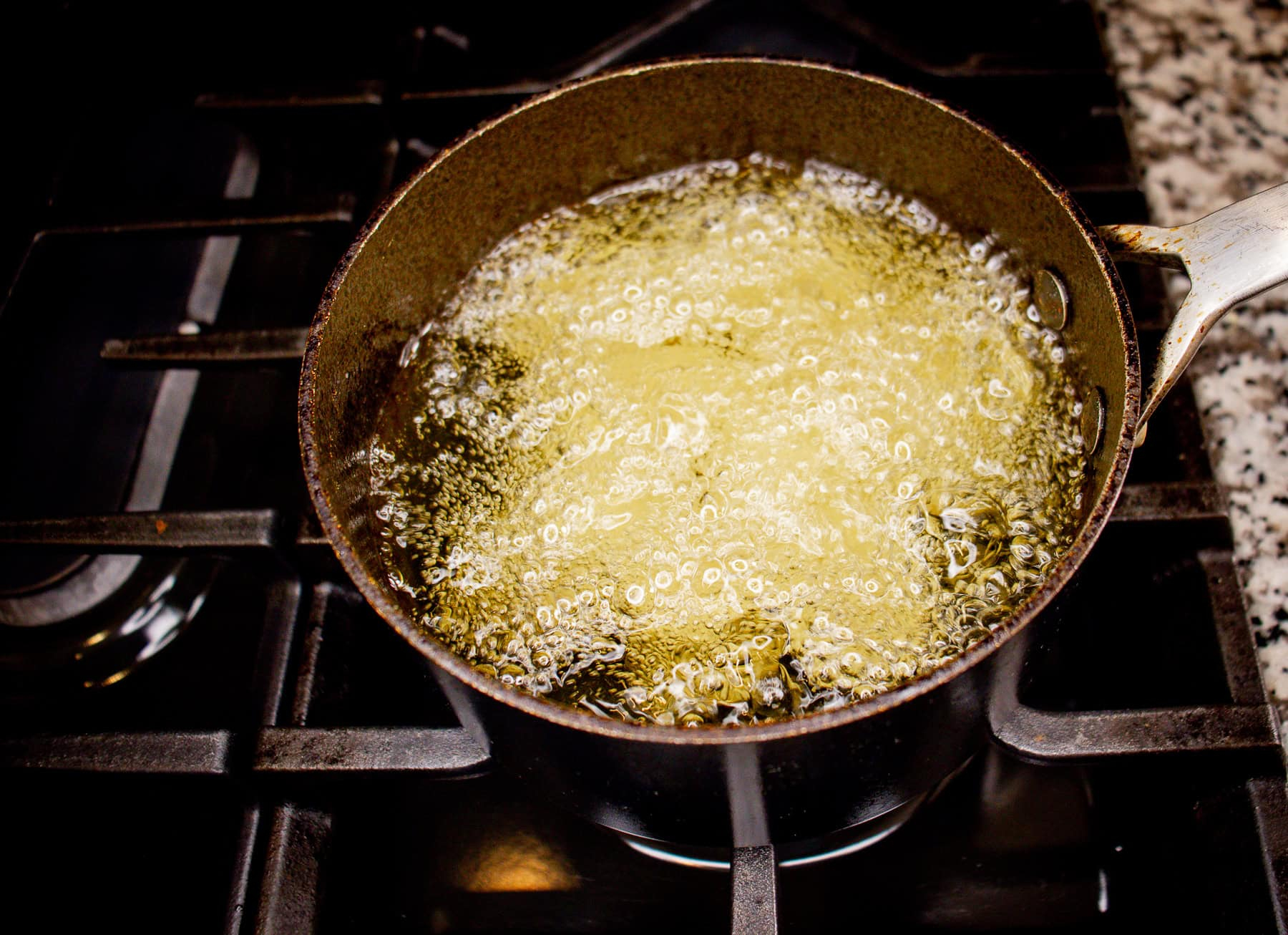
- Heat canola oil in a skillet or small pan over medium heat.
- Fry the plantains until they soften and turn a light golden color.
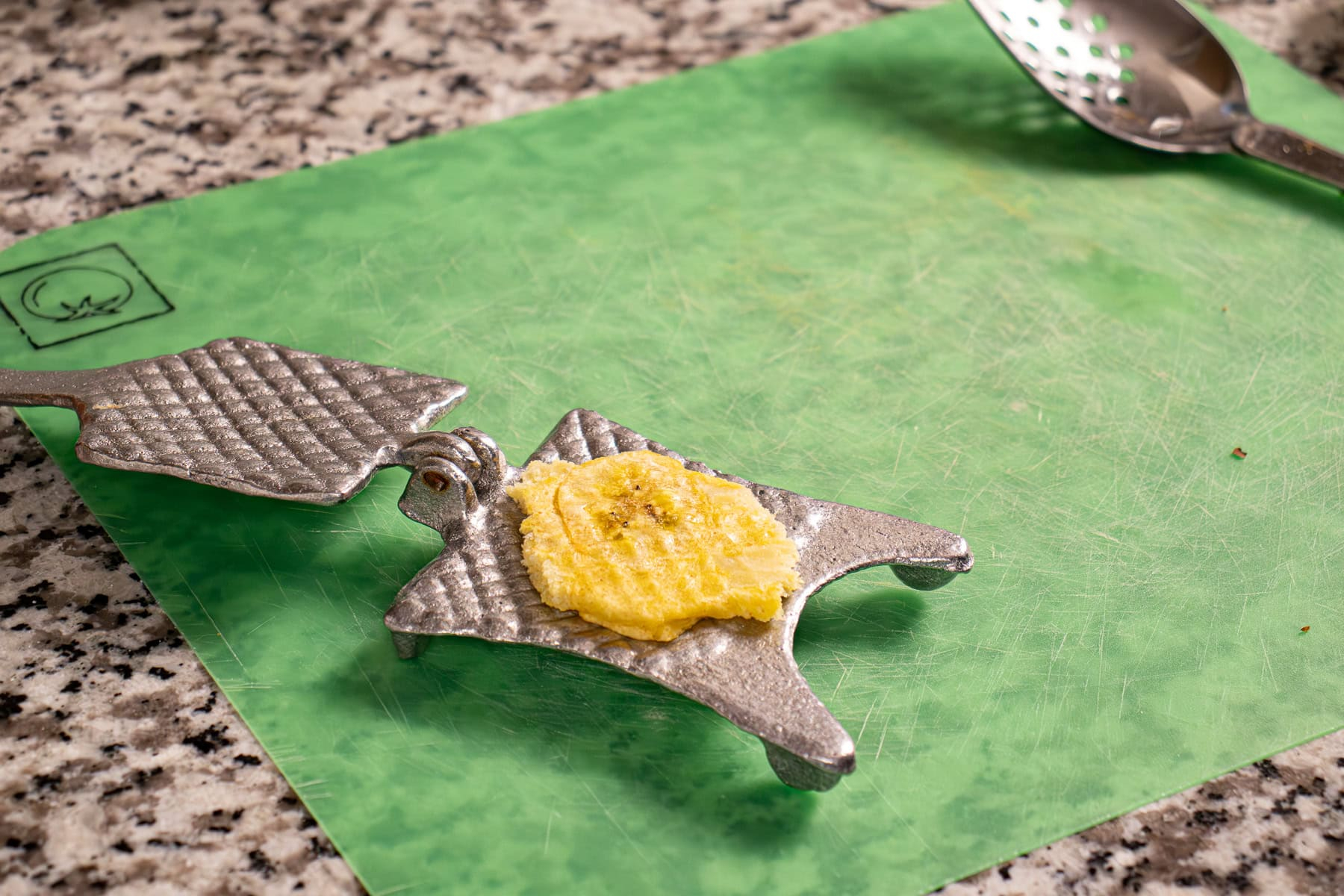
- Remove the plantains and flatten each one using a tostonera or the bottom of a glass or cup.
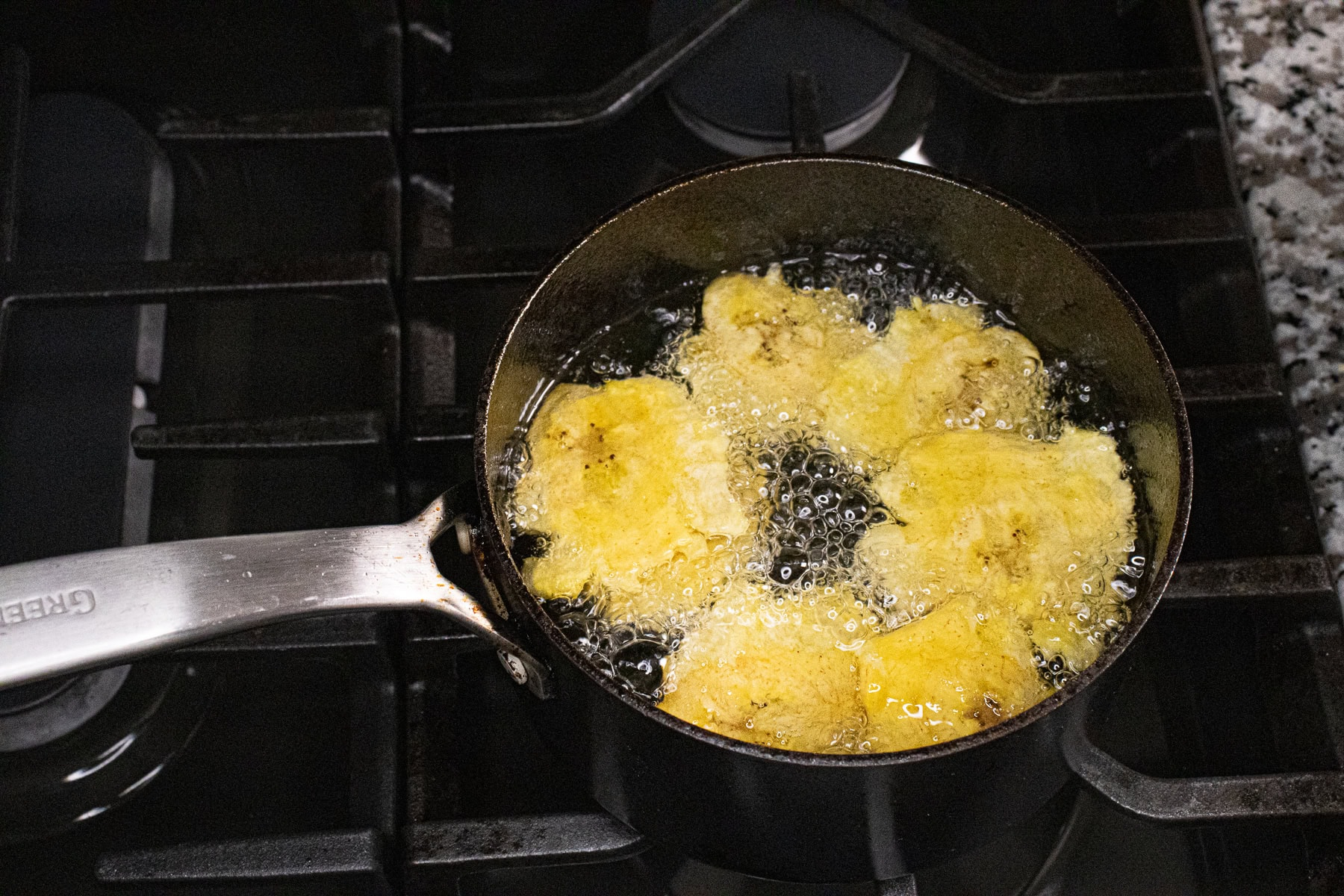
- Place the flattened plantains back into the hot oil and fry again until they are golden and crispy.
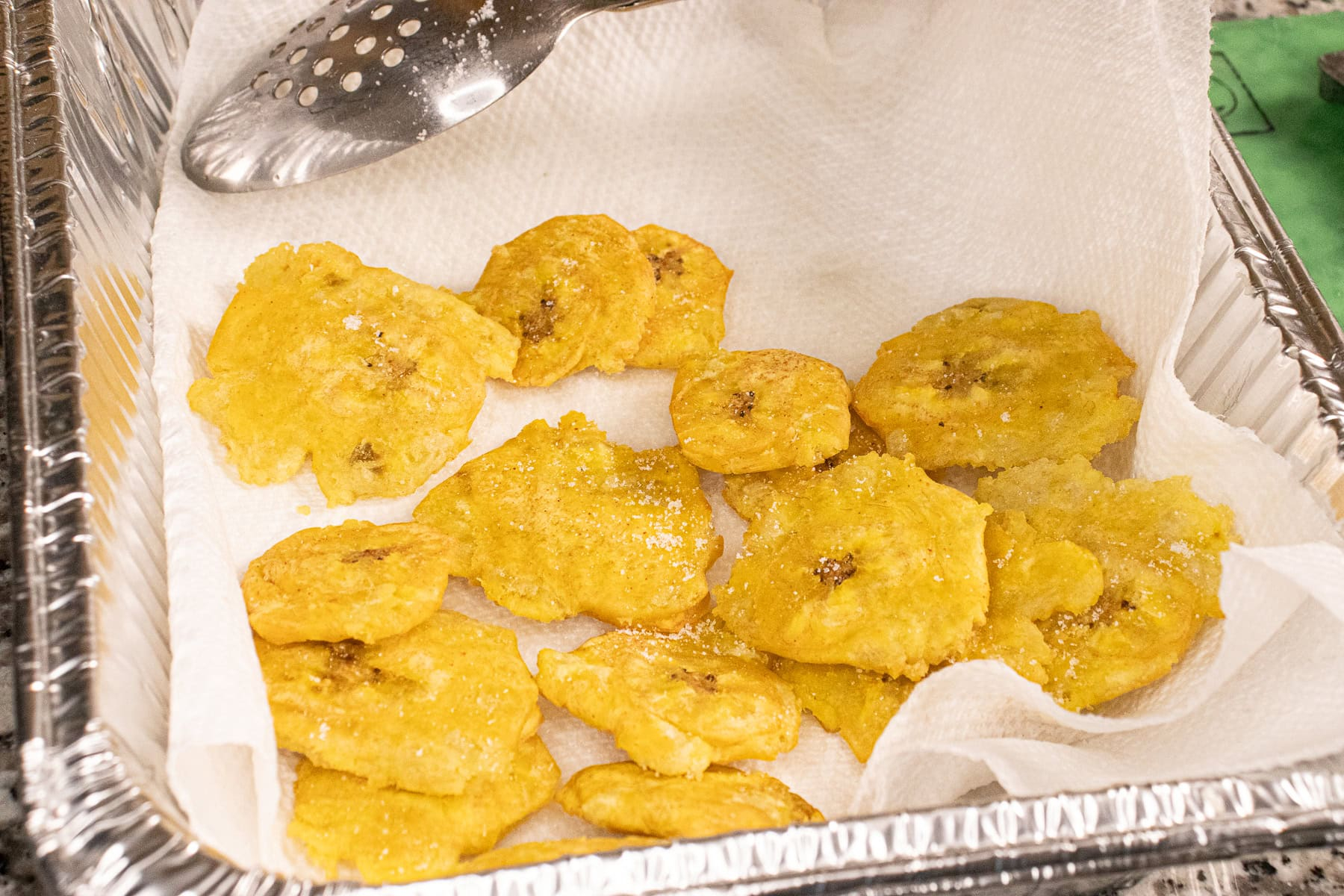
- Remove them from the oil and set them on a plate lined with paper towels so they can absorb the extra oil.
Notes
- Use green plantains only for crispy tostones.
- You must do a second fry, which is what gives them their crunch.
- Season with salt while the tostones are hot, so it sticks better.
- Tostones are best served hot and fresh.
- To heat tostones, place them in the oven or air fryer until they are hot and crispy again. I do not recommend reheating them in the microwave since they will lose their crunch.