
Home » Blog » Tools and Equipments » The Best Pot for Making Concón
Best Pot For Concón:
(Why I Love My Caraway Dutch Oven)
- By: Lucy
- Updated: July 8, 2026
- No Comments
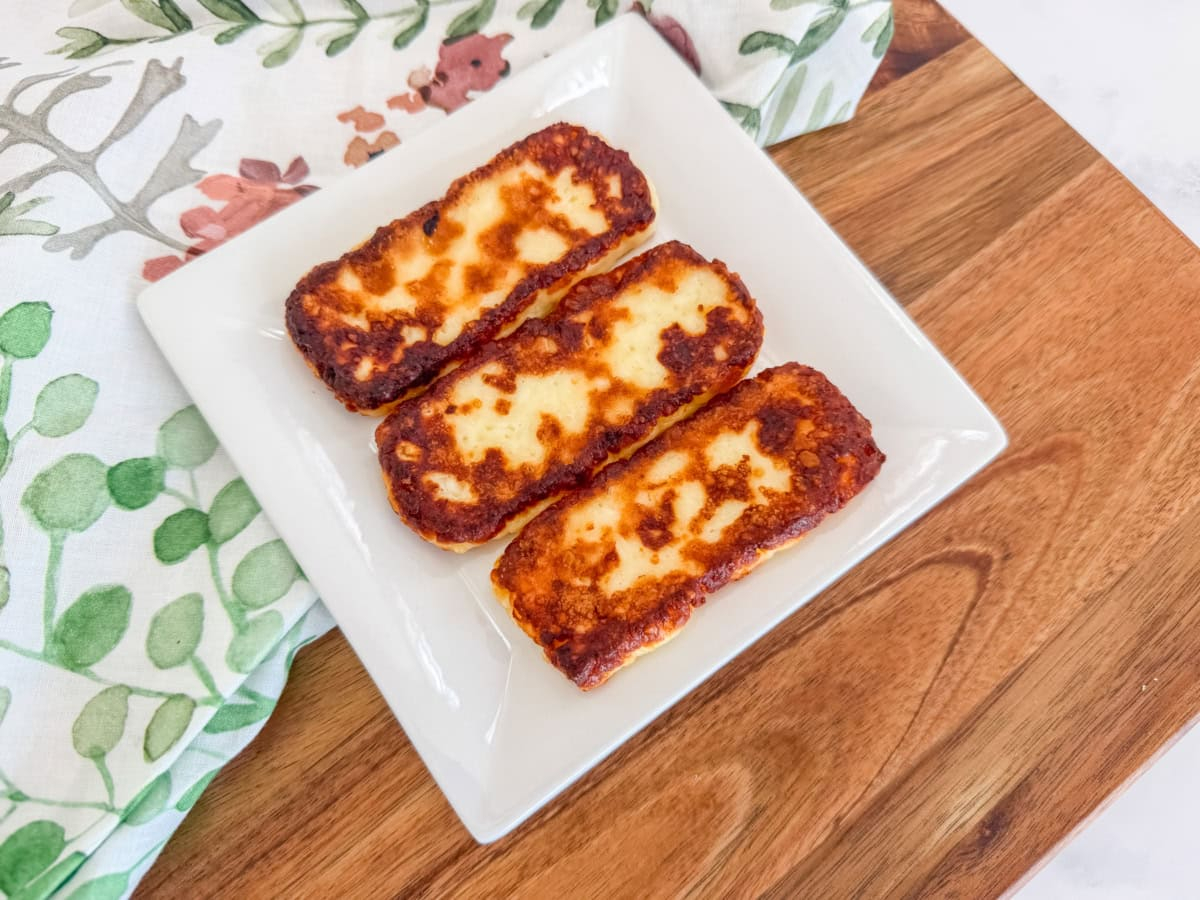
Concón is the crispy, golden layer of rice that forms at the bottom of the pot when cooking Dominican rice. Some people call it scorched rice, pegao in Puerto Rico, cocolón in Ecuador, or cucayo in Colombia, but in my house, we simply call it concón. Most importantly, we never throw it away. Good concón is crispy, golden, and easy to lift from the pot. It should never taste burnt or be so stuck that you have to fight to get it out.
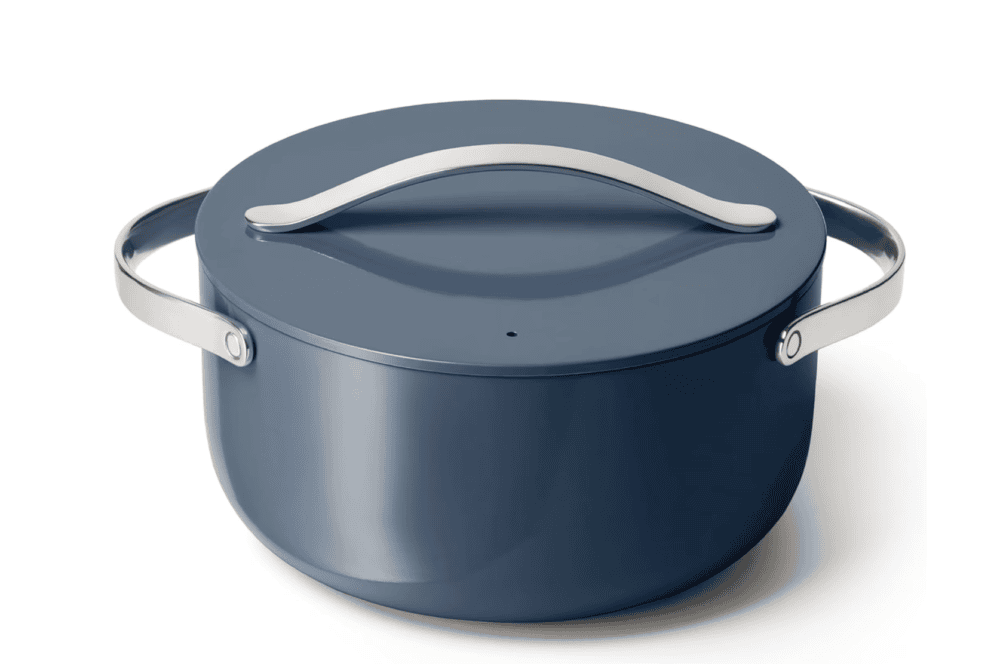
After cooking Dominican rice in many different types of cookware over the years, I have found that the best pot for making concón is one that heats evenly, retains heat well, and lets the crispy rice release easily without burning. For me, that pot is the Caraway Dutch Oven, and it has become my favorite for making rice, moro, beans, boil plantains and many other Dominican dishes.
In this review, I will explain why I love cooking rice in the Caraway Dutch Oven, share my favorite trick for getting beautiful golden concón every time, and help you decide whether it’s worth the investment for your kitchen.
Inside This Post
What Is the Best Pot for Making Concón?
The best pot for making concón is one that heats evenly, retains heat well, and allows the crispy rice to release without burning. In my experience, the Caraway Dutch Oven consistently produces golden, crispy concón while making cleanup much easier than many other pots I have used.
Why the Right Pot Matters
When you make rice, the bottom layer needs time and consistent heat to turn into concón. Rice cooks from the bottom up, so the cookware plays a major role in how the starches (rice) cook and brown. A pot that distributes heat evenly helps the rice cook consistently while allowing the bottom layer to slowly crisp into golden concón instead of burning in hot spots.
If the pot heats unevenly, some parts of the rice may burn while others stay soft. If the surface is too sticky, you might get concón, but it can be difficult to lift out in one piece. That’s why the pot you use matters.
I don’t want rice that’s burnt on the bottom. I want a crispy, golden layer with the right texture. That’s the difference. Concón is more than just rice stuck to the bottom of the pot. Good concón has texture, flavor, and lifts off in beautiful pieces. And when you spoon some habichuelas guisadas over it, it’s honestly one of the best bites on the plate.
Why I Like The Caraway Dutch Oven For Rice
The Caraway Dutch Oven has become my go-to pot for making rice because it heats evenly and consistently.The rice cooks beautifully, and the bottom layer turns into crispy, golden concón without burning too quickly. The pot has a nice weight to it and feels sturdy enough for everyday cooking. Whether I’m making rice, simmering beans, cooking stews, or boiling plantains for mangú, I want cookware that can handle the meals my family eats most. This pot does exactly that, and it’s surprisingly easy to clean, which is such a bonus!
My Trick For Getting Concón To Release
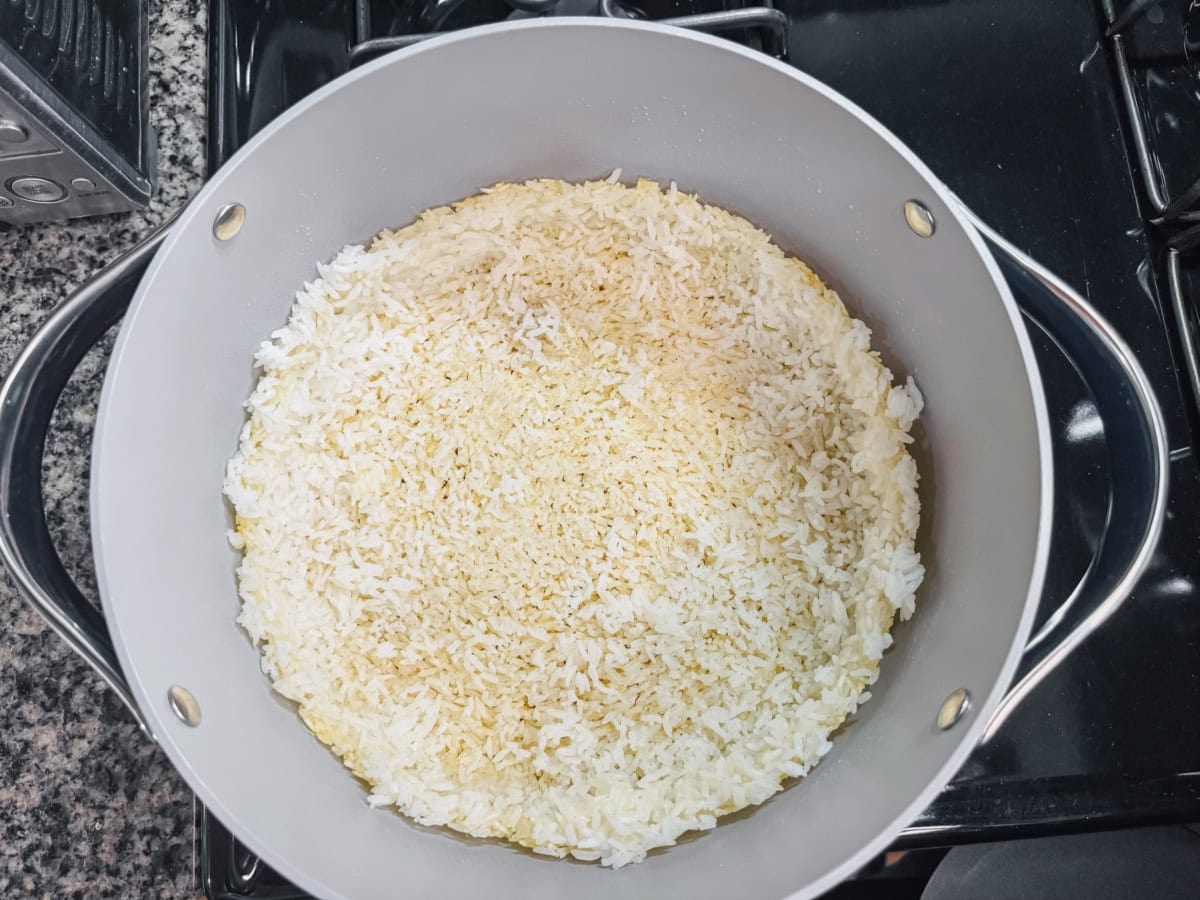
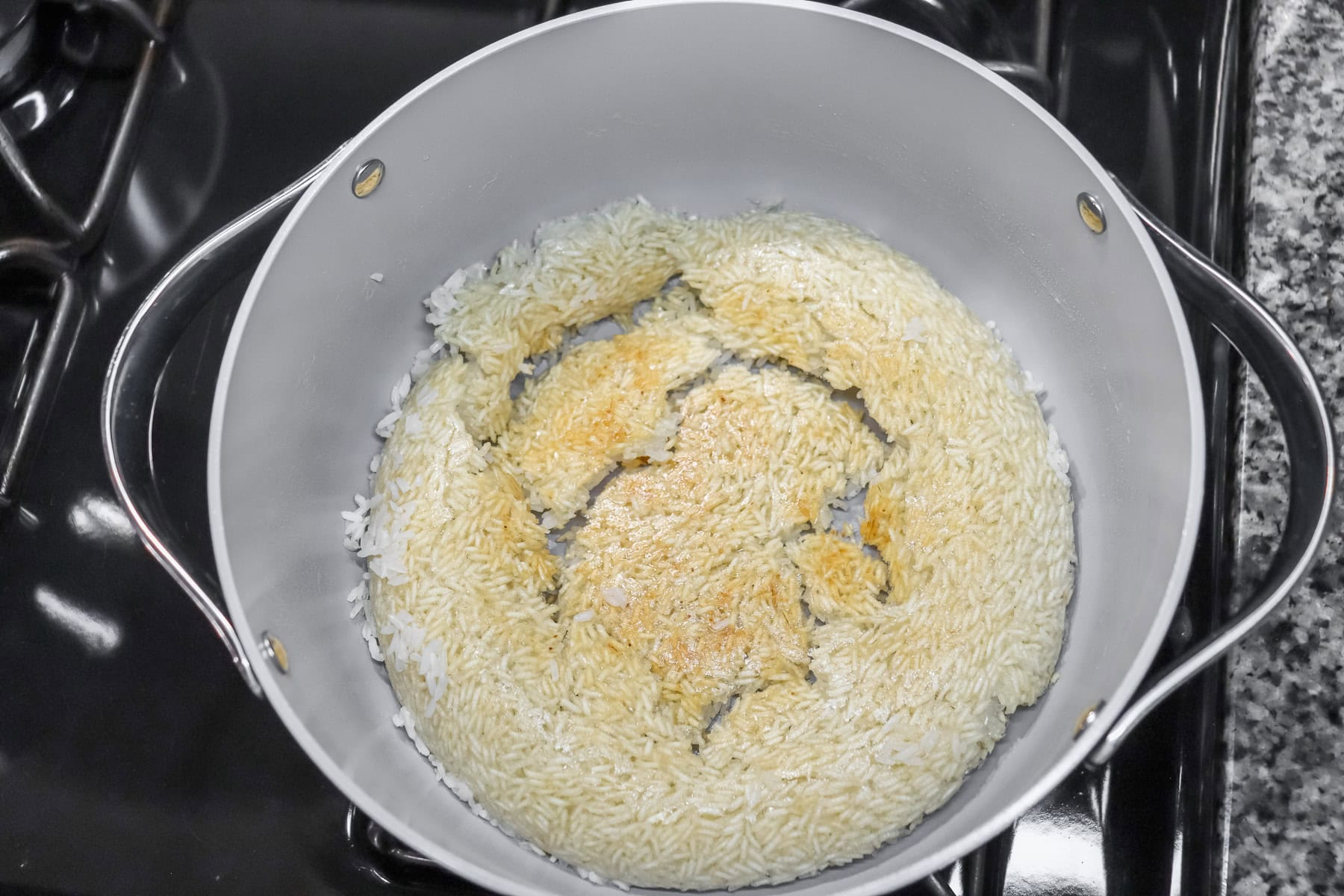
This is the part that matters. The longer you leave the rice, the more concón you will get. In other words, the concón will be thicker and crunchier. If you enjoy a thinner, not-too-crispy concón, you can take out the rice as soon as it is done. Remember, you do not want to scrape hard, especially if you are using a ceramic-coated Dutch oven.
Here’s what I do. Once the rice is cooked, I remove the fluffy rice from the top and let the concón continue cooking for a few more minutes. Then I increase the heat slightly until it reaches the crispness I like. As it firms up, it naturally begins to release from the pot, so there’s no need to force it.
Using enough oil helps, too. The oil creates a base for the concón. It helps the rice stick together, form a nice crust, and come out of the pot more easily. That little extra time at the end makes such a difference. When it is ready, the concón comes out beautifully.
The Ceramic Coating Makes Cleanup Easier
One of the features I like most about the Caraway Dutch Oven is its ceramic nonstick coating.
When making concón, you want the rice to form a crispy crust while still being able to lift it from the pot. I don’t want half of the concón stuck to the bottom while I am left scraping and soaking the pot after dinner. The ceramic coating makes cleanup much easier, especially after cooking rice, beans, stews, and other meals.
It is essential to appropriately care for your Dutch oven. I avoid metal utensils, use silicone or wooden utensils instead, wash it with a soft sponge, and never scrape the bottom aggressively. Like any quality piece of cookware, a ceramic Dutch oven will last longer when it’s properly cared for.
The Beautiful Colors of a Caraway Pot
Performance was my main priority, but I also really love how beautiful the Caraway Dutch Oven looks in my kitchen. Caraway has several matte colors, so it is easy to choose one that fits your kitchen and your style.
I looked at a few different colors, but I ended up choosing Navy. It felt classic and worked well with the rest of my kitchen. Even when I leave it on the stovetop, it looks so nice.
What I Use It For Besides Concón
At first, I bought my Caraway Dutch Oven specifically for making rice and concón. Before long, though, I found myself reaching for it almost every day. It has become one of the most-used pots in my kitchen because it’s versatile enough for so many of the Dominican dishes I make for my family.:
- Boiling green plantains for mangú
- Boiling malanga
- Making Dominican white rice
- Cooking moro
- Making habichuelas guisadas
- Simmering stews
- Making soups
- Making oxtail stew
- Chicken stew (pollo guisado)
It’s deep enough for soups and stews, yet wide enough to cook plenty of food for my family. I also appreciate that I can go from making rice one day to simmering beans or a stew the next without needing a different pot. That’s what makes it one of those pieces of cookware I actually use all the time instead of letting it sit in a cabinet collecting dust.

Why It Works So Well for Dominican Cooking
Dominican cooking puts your cookware to the test. One day you’re boiling plantains. The next, making moro. Then simmering beans, cooking rice, or letting a stew slowly build flavor. I like cookware that keeps up with how I actually cook.
Whether I’m making rice, beans, or boiling plantains, I need a pot that can do it all. I want even cooking for rice and golden concón, enough room for beans to simmer without boiling over, and enough depth for boiling plantains without a mess.
That’s why this Dutch oven has become one of the most-used pots in my kitchen. It works just as well for a pot of habichuelas guisadas as it does for moro, white rice, soups, and stews. I was so impressed by its versatility that I bought a second one just a few months after buying the first.
What To Know Before Buying
The Caraway Dutch Oven is definitely an investment. I waited until Black Friday to buy mine, and I’d recommend watching for holiday sales if you’re thinking about getting one. While I do think it’s worth the price, there’s nothing wrong with waiting for a good sale.
You do not need this pot to make good Dominican food. You can make excellent rice, beans, stews, and concón in a traditional caldero or any pot you already love. This review is simply about the pot that has worked best for me after years of cooking Dominican food at home.
If you cook often and want a Dutch oven that looks beautiful, performs well, and is easy to clean, I do think this one is worth considering.
How I Care For My Caraway Dutch Oven
Since this pot has a ceramic coating, I try to take good care of it so it continues to perform well for years to come.
Here are a few habits I follow:
- I let the pot cool down before washing it.
- I wash it with soft sponges.
- I avoid metal utensils and use silicone or wooden utensils instead.
- I don’t scrape the bottom aggressively.
- I avoid stacking heavy pots and pans inside it without protection.
- I cook mostly on medium heat unless a recipe calls for higher heat.
Taking good care of your Dutch oven not only helps protect the ceramic coating, but it also keeps it performing its best. That means more beautifully cooked rice, easier cleanup, and plenty of golden concón for years to come.
Final Thoughts
For me, the Caraway Dutch Oven is far more than a pretty pot. It helps me prepare the foods my family loves, like rice, beans, stews, mangú, moro, and, of course, concón. That crispy, golden bottom layer is one of the little things that makes Dominican cooking so special, and it’s a tradition I never get tired of.
In my kitchen, the Caraway Dutch Oven has earned its place. After cooking Dominican rice in many pots over the years, I can honestly say it’s my favorite for making concón. If you’re looking for the best pot for concón, this is the one I keep reaching for.





Similar Posts You May Enjoy

Lucy
Mom, wife, educator, and the heart behind Mom, What Did You Make? Inspired by my son’s daily question, this blog began as a way to share our favorite Dominican recipes and has grown into a space for food, family, and advocacy. Here, you’ll find recipes that honor our culture, parenting insights shaped by 15 years of teaching experience, and resources to help families feel supported and empowered.
